

Lost Foam Casting
Why Choose Us
Rich Experience
Taiyuan Simis Investment Casting Co., Ltd was established in 2014. After 15 years of development, it has developed from a single precision casting factory to a comprehensive mechanical product supplier that can provide precision casting, sand casting, die casting and precision machining parts.
Professional Technical Team
Our company has 3 professor-level engineers, 5 senior engineers, 12 junior engineers, 20 inspectors and about 350 workers. There are one precision casting factory, one sand casting factory, one die casting factory and two machining factories.
Reliable Product Quality
After the unremitting efforts of our all employees, our company has passed ISO, TS16949, TUV and other quality certifications. Always adhere to adopting our own proprietary technology in core technology...
Wide Market
We understand the design and quality requirements of foreign customers for mechanical products. About 85% of our products are exported to North America, Europe and around the world.
Lost-foam casting (LFC) is a type of evaporative-pattern casting process that is similar to investment casting except foam is used for the pattern instead of wax. This process takes advantage of the low boiling point of polymer foams to simplify the investment casting process by removing the need to melt the wax out of the mold.
-
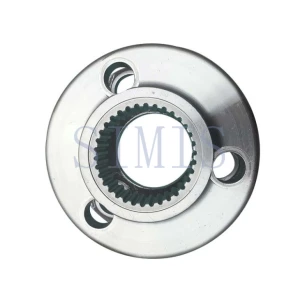
![Planet Carrier]() Planet CarrierThe casting technology of our planet carrier is lost foam casting, the material is cast iron GGG40 or alloy steel 42CrMo. Our planet carrier is widely used in the field of wind power and mining....read more
Planet CarrierThe casting technology of our planet carrier is lost foam casting, the material is cast iron GGG40 or alloy steel 42CrMo. Our planet carrier is widely used in the field of wind power and mining....read more -
![Steel Butterfly Valve Casting]() Steel Butterfly Valve CastingWe produce the butterfly valve castings by investment casting process from DN50 to DN250, by lost foam casting process from DN300 to DN800.read more
Steel Butterfly Valve CastingWe produce the butterfly valve castings by investment casting process from DN50 to DN250, by lost foam casting process from DN300 to DN800.read more -
![Steel Ball Valve Casting]() Steel Ball Valve CastingWe can produce various types of ball valve castings according to customer drawings. We can provide a full set of ball valve equipment according to international standards.read more
Steel Ball Valve CastingWe can produce various types of ball valve castings according to customer drawings. We can provide a full set of ball valve equipment according to international standards.read more -
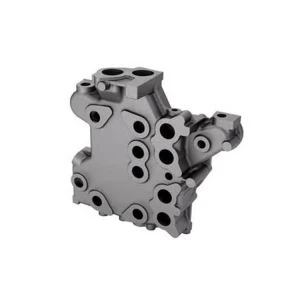
![Gear Box Casting]() Gear Box CastingOur Simis is a professional casting manufacturer in China. We can supply various styles of gear box casting according to customer drawings and samples.read more
Gear Box CastingOur Simis is a professional casting manufacturer in China. We can supply various styles of gear box casting according to customer drawings and samples.read more


Advantages of Lost Foam Casting
High Precision and Accuracy
One of the primary advantages of lost foam casting is its ability to produce highly precise and accurate metal parts. The foam patterns allow for intricate details and tight tolerances, resulting in parts that meet exact specifications.
Cost-Effectiveness
Lost foam casting is cost-effective due to the reduced need for machining and finishing operations. The process minimizes material waste and can produce parts with minimal defects, reducing overall production costs.
Design Flexibility
The lost foam casting process offers significant design flexibility. Complex geometries and intricate details that would be difficult or impossible to achieve with traditional casting methods can be easily produced using lost foam casting.
Reduced Waste
The use of foam patterns and precise molding techniques reduces material waste in lost foam casting. This efficiency not only lowers costs but also makes the process more environmentally friendly compared to other casting methods.
Types of Lost Foam Casting
Steel Butterfly Valve Casting
We can produce various types of butterfly valve castings according to customer drawings. We can provide a full set of butterfly valve equipment according to international standards. At the same time, we are also willing to provide semi-finished butterfly valve castings to meet customer requirements.
Transmission Housing
The material of our transmission housing include stainless steel casting, carbon steel casting, cast iron casting , aluminum casting and Ni resist casting. We can cast and machining transmission housing as customer's requirements.
Clutch Housing
We can produce clutch housing castings and machined parts according to customer's design and requirements. The material can be cast iron, cast steel, aluminum. The casting process can be used ordinary sand casting, lost foam casting and investment casting.
Steel Ball Valve Casting
We can produce various types of ball valve castings according to customer drawings. We can provide a full set of ball valve equipment according to international standards.
Cast Iron Pipe Fittings
We can produce various types of cast iron pipe fittings according to customer drawings. Perfect internal organization structure, excellent surface quality and guaranteed delivery time are our tenets. According to BS standard, control the production and inspection process to meet all customer requirements.
Gear Box Casting
Ur Simis is a professional casting manufacturer in China. We can supply various styles of gear box casting according to customer drawings and samples. Perfect internal organization structure, excellent surface quality, precision dimensional tolerance and guaranteed delivery time are our tenets.
Transmission Case
We can provide transmission case casting of various materials, including stainless steel casting, carbon steel casting, cast iron casting, aluminum casting and Ni Resist casting, etc.
What Are The Metals Used In Lost Foam Casting
Stainless Steel
Stainless steel, composed primarily of iron and chromium, is renowned for its exceptional corrosion resistance and strength. It is preferred in applications requiring both durability and aesthetic appeal. During the lost-foam casting process, molten stainless steel is poured into the foam mold, replacing the evaporated foam to form intricate shapes. While stainless steel may be more costly and challenging to work with, its high strength and corrosion resistance make it indispensable in various industries.
Aluminum Alloys
Aluminum alloys combine aluminum with other elements to achieve a balance of lightweight properties and effective thermal conductivity. In lost-foam casting, these alloys are used where parts require specific strength-to-weight ratios. Their lightweight nature and good thermal properties are advantageous, though they may have limitations in applications requiring extremely high strength. Aluminum alloys are widely utilized across industries for their versatility and performance characteristics.
Nickel Alloys
Nickel alloys are prominent in lost-foam casting for their exceptional resistance to high temperatures and corrosion. These alloys are favored in extreme environments and specialized applications where robust performance is critical. Nickel alloys offer unique properties but require careful consideration of cost and alloy selection to match specific application needs effectively.
Steels
Steels encompass a broad range of alloys tailored for specific applications in lost-foam casting. These alloys vary in strength, hardness, and wear resistance, catering to diverse industrial needs. While offering a spectrum of advantageous properties, precise alloy selection is crucial to meet specific application requirements effectively. Steels are extensively used in automotive, aerospace, and machinery sectors for their reliability and mechanical properties.
Cast Irons
Cast irons, including variations like gray iron and ductile iron, are crucial in lost-foam casting due to their high compressive strength and wear resistance. They excel in heavy-duty applications where durability and toughness are paramount. However, achieving optimal results with cast irons requires meticulous control and consideration during the casting process to manage their unique properties effectively.
Application of Lost Foam Casting



Automotive Industry
Lost foam casting is widely employed in the automotive sector for manufacturing engine blocks, cylinder heads, intake manifolds, transmission cases, and other complex components. The process allows for the integration of intricate cooling passages and complex geometries.
Aerospace and Defense
The aerospace industry utilizes lost foam casting to produce parts such as turbine blades, aircraft engine components, and structural elements. The process enables the creation of lightweight, high-strength parts with precise details.
Agricultural Machinery
Lost foam casting is used to manufacture parts for agricultural machinery and equipment, including engine components, transmission housings, and structural elements.
Energy Generation
Components for power generation equipment, such as gas turbines and steam turbines, are often produced using lost foam casting due to its capability to create intricate cooling channels and precise geometries.
Industrial Machinery
Lost foam casting is utilized to create components for industrial machinery, pumps, valves, gearboxes, and other equipment requiring complex shapes and tight tolerances.
Medical Equipment
The medical industry benefits from lost foam casting for producing components used in medical equipment such as imaging devices, analytical instruments, and surgical tools.
Construction and Architecture
Lost foam casting can be used for creating architectural elements, decorative features, and customized hardware for buildings and structures.
Marine and Shipbuilding
Parts for marine equipment, ship components, and boat fittings can be manufactured using lost foam casting, including propellers, rudders, and navigation systems.
Railway and Transportation
Lost foam casting is employed in the railway industry for producing components like brake systems, wheel hubs, and structural parts.
Oil and Gas Industry
Components used in the exploration, extraction, and transportation of oil and gas, such as pumps, valves, and connectors, can be manufactured using lost foam casting.
Art and Sculpture
Artists and sculptors use lost foam casting to create intricate and detailed metal sculptures and artworks.
Jewelry and Accessories
Lost foam casting is used in jewelry making to create intricate and artistic pieces, including rings, pendants, and other accessories.
Entertainment and Film Industry
Lost foam casting is employed to produce props, set decorations, and other metal components used in the entertainment and film industry.
Research and Development
Lost foam casting is valuable in research and development for creating prototype parts, testing new designs, and evaluating materials.
Lost Foam Casting Stages
Creating patterns with EPS materials
The pattern material can be formed into the desired shape of the object using blocks. Furthermore, the pattern material can be polystyrene foam granules molded in metal molds and heated with moisture, causing the grains to bind together and form a pattern.
Creating a gating system (casting channel)
The pouring channel is constructed from polystyrene foam material by the design, and the forming process is identical to the pattern-making process. The runner (flow channel), sprue (inlet), and pattern are all included in the gating system. After the gating system is created, the pattern and gating system is assembled to form a cluster (pattern tree).
The process of pattern coating with ceramic material
Ceramic powder or powder dissolved in colloidal silica or a similar material. The process of coating the pattern by dipping to achieve coating homogeneity on all parts. When pouring liquid into the mold and producing a smooth cast surface, coating serves to hold molded sand into cast objects. Depending on the need, the coating can be done once or multiple times depending on the need, a thick coating will prevent gases from escaping from the mold and may result in cast object defects.
Insert the coated pattern into the molding frame
The pattern is stockpiled with sand without binders until it is flush with the pattern’s top. A vibratory machine is used in the compaction of the mold using the vibration method.
Pouring Liquid into Molds
After all of the processes are completed, the liquid is poured into the mold. If the pattern does not completely burn, it will be converted into a gas or residue by the metal liquid.
Mold Disassembly
Turning over the printed frame begins the disassembly process. Because cast objects do not contain a binder, they will easily separate from the molded sand.
Difference Between Lost Foam Casting Vs Sand Casting
Both lost-foam casting and sand casting have their strengths and are selected based on the specific requirements of the part being produced, including complexity, size, finish, and cost considerations.
|
Aspect |
Lost-Foam Casting |
Sand Casting |
|
Process |
Uses foam patterns coated with refractory material. Molten metal vaporizes the foam to create the component. |
Employs compacted sand molds to capture patterns and define part shape, with sand removed after solidification. |
|
Complexity |
Ideal for producing intricate, detailed, and complex parts easily. |
Best suited for simpler, larger parts due to molding constraints. |
|
Surface Finish and Tolerance |
Delivers smooth surface finishes and precise dimensions. |
Typically results in rougher surfaces and less precise tolerances. |
|
Cost and Tooling |
The cost of foam patterns is offset by avoiding complex mold-making; generally higher upfront costs. |
More cost-effective for low to medium production volumes with cheaper pattern materials. |
|
Part Size and Weight |
Suitable for both small and large parts. |
Optimal for larger components, especially in heavy machinery. |
Incomplete Fill or Misrun
Cause: Insufficient pouring time, inadequate gating system, or blockage in vents.
Solution: Optimize pouring time, improve gating design for proper metal flow, ensure clear and open vents, and use appropriate pouring techniques to achieve complete fill.
Gas Porosity
Cause: Entrapped gases from foam decomposition, improper venting, or excessive moisture in the mold.
Solution: Use high-quality foam patterns with low decomposition rates, ensure proper venting and mold permeability, and control moisture content in the mold.
Shrinkage Porosity
Cause: Insufficient feeding, inadequate riser design, or inadequate metal volume in critical areas.
Solution: Increase riser size and number, optimize gating design for better feeding, adjust pouring parameters to ensure adequate metal supply, and use feeding aids if necessary.
Surface Defects (Veining, Pinholes)
Cause: Inadequate mold coating, improper mold release agents, or excessive mold temperature.
Solution: Apply high-quality mold coatings, use appropriate release agents, control mold temperature, and optimize coating thickness for better surface finish.
Dimensional Inaccuracies
Cause: Pattern or mold distortion, thermal expansion/contraction, or improper cooling.
Solution: Ensure proper pattern construction and stability, control mold temperature, implement effective cooling techniques, and consider post-casting machining for dimensional accuracy.
Metal Penetration
Cause: Insufficient coating, excessive pouring temperature, or improper gating.
Solution: Apply high-quality coatings, control pouring temperature, improve gating system to regulate metal flow, and use barrier coatings if needed to prevent metal penetration.
Cracks and Hot Tears
Cause: High thermal stress, inadequate mold rigidity, or improper cooling.
Solution: Optimize cooling rate, enhance mold rigidity, control solidification parameters, and consider the use of chill plates or cooling inserts.
Possible Process Challenges That Need to Be Noted in Lost Foam Casting
Watch The Foam Patterns
When done right, lost foam casting ends up with a product that is solid and reliable. But, for that to happen, you also need to keep an eye on the foam patterns as they have a tendency to get damaged while you handle or transport them. Best foam for lost foam casting, As long as you can ensure that they’re good, you shouldn’t have any issues.
Coating Needs To Be Uniform
Another important stipulation has to do with the thickness of the coating. You need to make sure that it is spread evenly across the foam, because any inconsistencies can lead to differences in the surface finish and the dimensions of the finished product.
Ensure A Strong Connection
It is beyond critical to make sure that the foam pattern and the refractory coating are properly joined. If the adhesion isn’t strong enough, the coating will fail when you pour in the molten metal.
Don’t Keep Any Gases In The Loop
If you want the finished product to be of high quality, then you need to make sure that vapor and gases are allowed to escape properly. This allows you to prevent issues like voids and gas pockets, which will only affect the quality of your casting even more.
Lost Foam Casting Process, Measures to Reduce the Bubble Generation of Castings




1. The gasification and decomposition of the foam model produces a large amount of gas and residues that cannot be discharged in time. The foam and coating layer are filled with dry sand. The drying is not good. Under the high temperature of the liquid alloy, a large amount of hydrogen and oxygen are cracked to invade the casting. The main cause of stoma.
2. Poor deoxidation of molten steel, dirty slag removal in the furnace base, furnace and ladle, too short sedation time, poor slag retention during the pouring process, and unreasonable pouring process resulting in slag holes.
3. Due to the unreasonable design of the gating system, the filling speed of the molten metal is greater than the foam gasification retreat and the gas discharge speed, causing the filling front to entrap the gasification residue in the metal liquid and vaporize again to form smoke-black decomposition pores on the inner wall .
4. The pouring temperature is low, and the molten metal at the front of the filling can not fully vaporize the foam, and the undecomposed residual material has no time to float to the riser and solidify to form pores in the casting.
5. The location of the inner runner is unreasonable, and a dead corner area is formed during filling. Due to the gas pressure in the cavity, gasification residues accumulate in the dead corner to form pores. The cross-sectional area of ??the inner runner is too large, making the filling speed faster than Foam gasification retreat speed, swallow foam, decomposition and gasification inside the alloy, but the gas cannot be discharged to form pores.
6. The air permeability of the coating is poor or the negative pressure is insufficient, and the air permeability of the filling sand is poor, and the gas and residues in the cavity cannot be discharged in time, and pores are formed under the filling pressure.
7. The pouring speed is too slow to fill the sprue cup, exposing the sprue, entraining air, sucking in the slag, and forming enveloping air holes and slag holes.
8. The volume of the sprue cup is too small, and the molten metal forms a vortex, which intrudes into the air to form air holes.
9. The connection between the sprue cup and the sprue and the pouring system is not well sealed, especially the connection between the sprue and the sprue cup is not well sealed, and it is easy to form sand and pores under the action of negative pressure. This phenomenon can be calculated and explained by Bernoulli equation.
10. The particle size of the molding sand is too fine, the dust content is high, the air permeability is poor, and the negative pressure is distorted due to the blockage of the negative pressure pipe. The negative pressure value around the cavity is far lower than the indicated negative pressure, and the vapor cannot be discharged from the coating in time. Form pores or wrinkled skin.
Our Certifications
Our company has passed ISO9001, TS16949, TUV and other quality certifications.

Our Factory
Taiyuan Simis Investment Casting Co., Ltd was established in 2014. After 15 years of development, it has developed from a single precision casting factory to a comprehensive mechanical product supplier that can provide precision casting, sand casting, die casting and precision machining parts. Our company has 3 professor-level engineers, 5 senior engineers, 12 junior engineers, 20 inspectors and about 350 workers. There are one precision casting factory, one sand casting factory, one die casting factory and two machining factories. After the unremitting efforts of our all employees, our company has passed ISO, TS16949, TUV and other quality certifications.

Ultimate FAQ Guide to Lost Foam Casting
Find professional lost foam casting manufacturers and suppliers in China here. Please feel free to buy high quality lost foam casting at competitive price from our factory. For customized service, contact us now.