

Superalloy Casting
Professional Superalloy Casting Supplier
Taiyuan Simis Investment Casting Co., Ltd was established in 2014. After 15 years of development, it has developed from a single precision casting factory to a comprehensive mechanical product supplier that can provide precision casting, sand casting, die casting and precision machining parts.
-
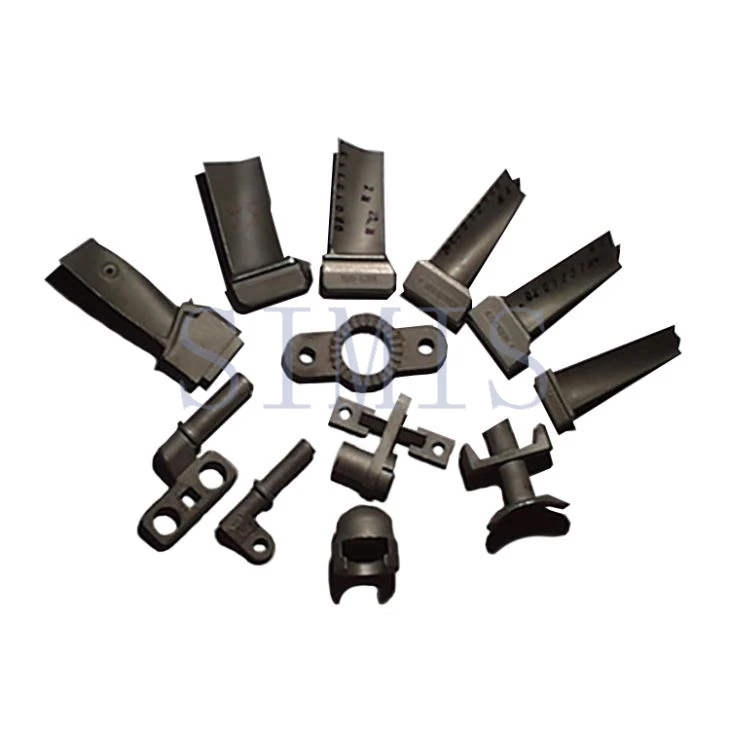
![Nozzle Guide Vane]() Nozzle Guide VaneNozzle guide vane is made from nickel base high temperture alloy, cobalt base superalloy and stainless steel. We can cast and machining all kinds of nozzle rings as customer's drawings.read more
Nozzle Guide VaneNozzle guide vane is made from nickel base high temperture alloy, cobalt base superalloy and stainless steel. We can cast and machining all kinds of nozzle rings as customer's drawings.read more -
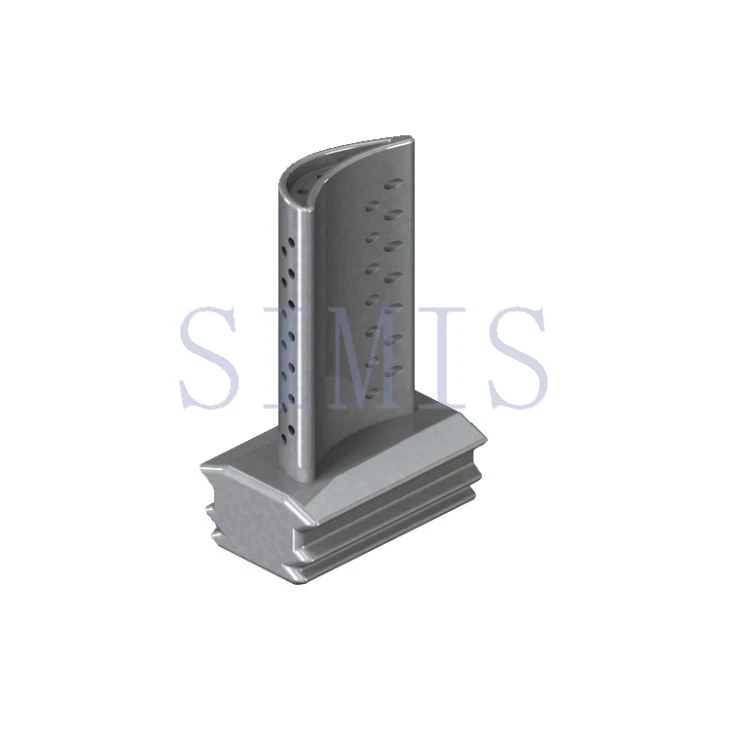
![Turbine Blades]() Turbine BladesOur Simis is a professional casting manufacturer in China. We can use vacuum investment casting technology to produce high temperature alloy castings and aluminum alloy castingsread more
Turbine BladesOur Simis is a professional casting manufacturer in China. We can use vacuum investment casting technology to produce high temperature alloy castings and aluminum alloy castingsread more


Why Choose Us
Professional Team
Our company employs three professor-level engineers, five senior engineers, twelve junior engineers, twenty inspectors, and approximately 350 workers.
Production Capacity
We operate one precision casting factory, one sand casting factory, one die casting factory, and two machining factories, covering an area of 8,000 square meters. Our annual output is about 500 tons of silicon glue investment castings and 2,000 tons of water glass investment castings.
Global Market
We understand the design and quality requirements of foreign customers for mechanical products. About 85% of our products are exported to North America, Europe and around the world.
Our Technical Certification
After the unremitting efforts of our all employees, our company has passed ISO, TS16949, TUV and other quality certifications.
Types of Superalloy Casting
Nozzle Guide Vane
Nozzle guide vane is made from nickel base high temperture alloy, cobalt base superalloy and stainless steel. We can cast and machining all kinds of nozzle rings as customer's drawings.
Turbine Blades
Turbine blades are a key component of the turbine part of a gas turbine engine. They are responsible for converting the energy of high-temperature and high-pressure gas into mechanical energy to drive the engine.

Parameters
|
Parameter |
Typical Value/Range |
|
Melting Point |
1300–1400 °C |
|
Pouring Temperature |
1500–1600 °C |
|
Mould Type |
Investment casting typically uses ceramic |
|
Mold Preheat Temperature |
850–1100 °C |
|
Vacuum or Inert Atmosphere |
Vacuum (<10⁻³ torr) / Argon atmosphere |
|
Pouring Rate |
1–5 kg/s |
|
Holding Time at Temp |
10–30 minutes |
|
Cooling Rate |
5–50 °C/min (controlled) |
|
Post-Casting Heat Treatment |
Solution annealing + Aging |
|
Shrinkage Allowance |
~2–3% |
Advantages of Superalloy Casting
High-Temperature Performance
Superalloy castings maintain their mechanical properties at elevated temperatures, making them ideal for applications involving extreme heat.

Superior Corrosion Resistance
Superalloy castings exhibit exceptional resistance to oxidation and corrosion, even in harsh chemical environments.
Enhanced Mechanical Strength
The inherent strength of superalloy castings allows them to withstand significant mechanical stresses without deforming or failing.

Fatigue and Creep Resistance
Superalloy castings possess excellent resistance to fatigue and creep, ensuring long service life under cyclic loading and high-stress conditions.
Versatility in Design
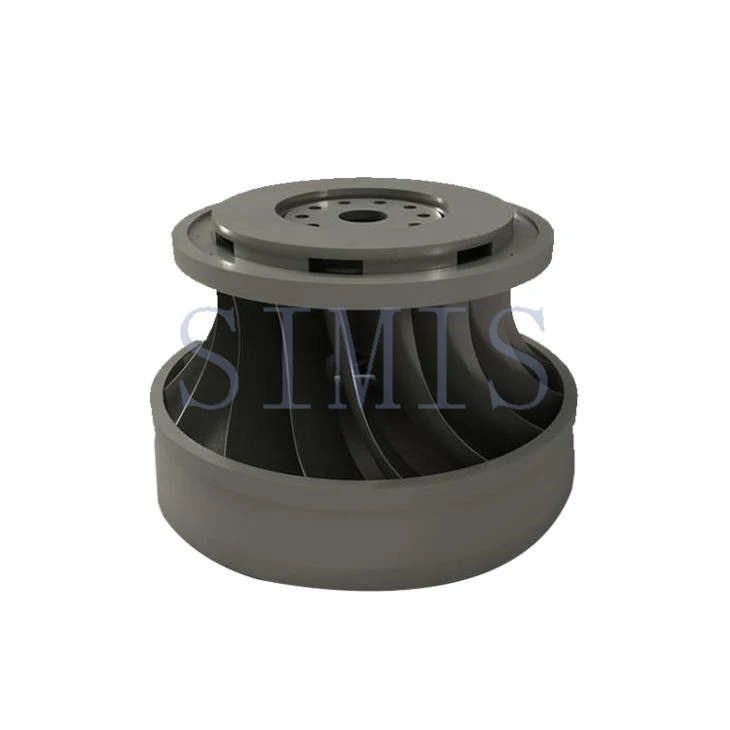
Superalloy castings enables the production of complex geometries and intricate designs that might be challenging or impossible to achieve with other manufacturing methods.

Dimensional Stability
Components casting from superalloy exhibit high dimensional stability, maintaining their shape and tolerances even under extreme operating conditions.
Surface Treatment
Surface treatments improve wear resistance, corrosion resistance, and aesthetic appearance. Common surface treatments include:
Blasting
Cleans the surface and prepares it for further treatment.
01
Anti-rust protection
Anti-rust oil, water-based rust preventer or anti-rust packing material……
02
Coating
Applies protective or decorative layers, such as wet painting, powder coating, e-coating, dacromet coating, zinc plating ( galvanization), chrome plating.
03
Polishing
Enhances surface smoothness and appearance, this is often used for stainless steel products.
04
Application of Superalloy Casting

Power Generation
Power plants use superalloy castings in heat exchangers, steam and gas turbines and boiler components.
Aerospace
The use of superalloy castings is very important in aerospace industry. These materials are used to make important components such as combustors, exhaust & turbine blades.
Marine Applications
Superalloy castings are well suited for marine applications because they resist seawater fouling and corrosion.
Chemical Processing
Chemical factories need superalloy castings for pipelines, reactors as well as heat exchangers because these components are exposed to high pressures and corrosive chemicals.
Automotive Industry
In automotive industry superalloy castings are used in exhaust systems, turbocharger wheels & high performance engine parts.
Production Process
| Step 1 | Getting orders. |
| Step 2 | Process design by technical department |
| Step 3 | Purchase of raw materials and pattern making &checking |
| Step 4 | Inspection of raw materials |
| Step 5 | Melting by middle-frequency induction furnaces |
| Step 6 | Ladle analysis by Spectrometer |
| Step 7 | De-oxidization, slag-removal, tapping |
| Step 8 | Pouring |
| Step 9 | Openning & fettling |
| Step 10 | Surface & dimensional check |
| Step 11 | Heat treatment |
| Step 12 | Inspection of physical property (UT test,MT test, hardness,impact value µstructure) |
| Step 13 | Packing |
| Step 14 | Shipping |
Our Quality Control
Hardness Test
Hardness is an essential characteristic of investment casting materials that determines their resistance to indentation. This physical property can be improved by heat treatment to enhance wear resistance according to the specifications of our customers.
Magnetic Particle Inspection
Magnetic Particle Inspection (MPI) is a non-destructive testing method used to detect surface and subsurface defects, including cracks, seams, inclusions, and porosity in investment castings. This method applies magnetic particles to the surface of the part, without damaging it in any way, to identify any invisible defects.
Material Test
During the investment casting process, material testing is crucial in ensuring that the finished product meets the required specifications. At KEMING MACHINERY, we use a spectrometer to precisely test the chemical composition of the investment casting materials. This technology accurately tests each element of the metal, and we compare the results with the material standards. If the values are within the acceptable range, we consider the material qualified. This process is called chemical analysis.
X-RAY TEST
X-Ray testing is a highly effective non-destructive inspection method that enables us to detect internal defects in investment castings. This technique exposes the casting to radiation from an x-ray tube, and the part absorbs part of the radiation. The remaining radiation exposes the radiographic film, and any inclusion or defect will appear as a dark area on the film.
Order Process
Send Inquiry
You can send us an inquiry via email at market@investment-casting.biz, detailing the material specifications and technical quality requirements you require. Our sales representative will contact you within 24 hours.
Get Quotation
Our professional technicians will make a detailed quotation based on the information you provide.
Drawing
Send us your drawings and we will model according to the drawings. If you don't have drawings, we also provide you with a design team.
Mold or Sample
Based on the design and price agreement, we can start making mold or samples.
Mass Production
After the mold is made, the sample is confirmed, and the payment information is received, we will place a mass production order, and after the order is completed, it can be shipped as required.
Packaging and Delivery
|
Package |
Normally we pack investment castings with ploy bags, then put them into carton box and standard wooden cases.We can also provide custom package service according to customers’ requirements. |
|
Delivery Time |
Sample delivery time is generally 25 days after the completion of the mold, mass production is not necessarily based on the quantity requirements, generally 30-40 days. |
|
Payment Policy |
Generally, 30% deposit T/T before production ,70% balance before shipment. T/T, Trade Assurance, Paypal, Western Union, Credit Card, L/C etc. |
|
Shipping |
Sea, Air, Express |
FAQ
Find professional superalloy casting manufacturers and suppliers in China here. Please feel free to buy high quality superalloy casting at competitive price from our factory. For customized service, contact us now.
casting for generator parts, lost wax precision steel parts, machining steel casting parts