

Gear
Why Choose Us
Rich Experience
Taiyuan Simis Investment Casting Co., Ltd was established in 2004. After 15 years of development, it has developed from a single precision casting factory to a comprehensive mechanical product supplier that can provide precision casting, sand casting, die casting and precision machining parts.
Professional Team
Our company has 3 professor-level engineers, 5 senior engineers, 12 junior engineers, 20 inspectors and about 350 workers.
Quality Control
There are one precision casting factory, one sand casting factory, one die casting factory and two machining factories.After the unremitting efforts of our all employees, our company has passed ISO, TS16949, TUV and other quality certifications.
High Quality
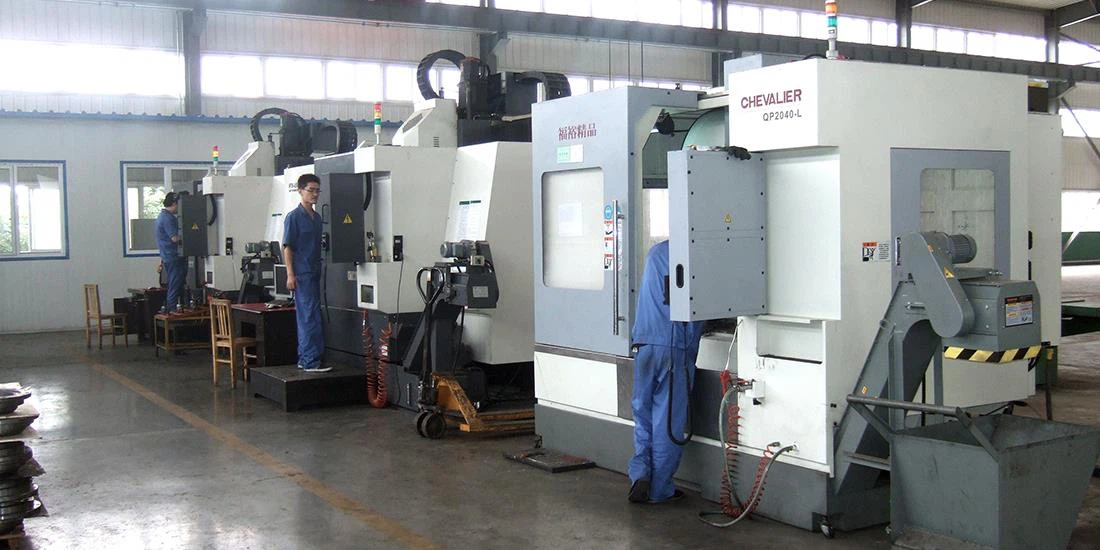
We have the ability to machining the difficult products, equipped with imported 4-axis and 5-axis CNC centers and various types of CNC machining equipment, supporting ultrasonic cleaning and CMM inspection.
A gear or gearwheel is a rotating machine part typically used to transmit rotational motion and/or torque by means of a series of teeth that engage with compatible teeth of another gear or other part. The teeth can be integral saliences or cavities machined on the part, or separate pegs inserted into it. In the latter case, the gear is usually called a cogwheel. A cog may be one of those pegs or the whole gear. Two or more meshing gears are called a gear train.
-
![Gear Forging]() Gear ForgingGear forging products are mainly used in mining machinery, petrochemical, automobile manufacturing and other industries, among which more than 90% are automobile forgings, of which cold and warm...read more
Gear ForgingGear forging products are mainly used in mining machinery, petrochemical, automobile manufacturing and other industries, among which more than 90% are automobile forgings, of which cold and warm...read more

Gears can be classified according to tooth shape, gear shape, tooth line shape, tooth surface and manufacturing method. According to the manufacturing method of gear is divided into casting gear, cutting gear, rolling gear, sintered gear, etc..
Spur Gear
Gears having cylindrical pitch surfaces are called cylindrical gears. Spur gears belong to the parallel shaft gear group and are cylindrical gears with a tooth line which is straight and parallel to the shaft. Spur gears are the most widely used gears that can achieve high accuracy with relatively easy production processes. They have the characteristic of having no load in the axial direction (thrust load). The larger of the meshing pair is called the gear and smaller is called the pinion.
Helical Gear
Helical gears are used with parallel shafts similar to spur gears and are cylindrical gears with winding tooth lines. They have better teeth meshing than spur gears and have superior quietness and can transmit higher loads, making them suitable for high speed applications. When using helical gears, they create thrust force in the axial direction, necessitating the use of thrust bearings. Helical gears come with right hand and left hand twist requiring opposite hand gears for a meshing pair.
Gear Rack
Same sized and shaped teeth cut at equal distances along a flat surface or a straight rod is called a gear rack. A gear rack is a cylindrical gear with the radius of the pitch cylinder being infinite. By meshing with a cylindrical gear pinion, it converts rotational motion into linear motion. Gear racks can be broadly divided into straight tooth racks and helical tooth racks, but both have straight tooth lines. By machining the ends of gear racks, it is possible to connect gear racks end to end.
Bevel Gear
Bevel gears have a cone shaped appearance and are used to transmit force between two shafts which intersect at one point (intersecting shafts). A bevel gear has a cone as its pitch surface and its teeth are cut along the cone. Kinds of bevel gears include straight bevel gears, helical bevel gears, spiral bevel gears, miter gears, angular bevel gears, crown gears, zerol bevel gears and hypoid gears.
Spiral Bevel Gear
Spiral bevel gears are bevel gears with curved tooth lines. Due to higher tooth contact ratio, they are superior to straight bevel gears in efficiency, strength, vibration and noise. On the other hand, they are more difficult to produce. Also, because the teeth are curved, they cause thrust forces in the axial direction. Within the spiral bevel gears, the one with the zero twisting angle is called zerol bevel gear.
Screw Gear
Screw gears are a pair of same hand helical gears with the twist angle of 45° on non-parallel, non-intersecting shafts. Because the tooth contact is a point, their load carrying capacity is low and they are not suitable for large power transmission. Since power is transmitted by the sliding of the tooth surfaces, it is necessary to pay attention to lubrication when using screw gears. There are no restrictions as far as the combinations of number of teeth.
Miter Gear
Miter gears are bevel gears with a speed ratio of 1. They are used to change the direction of power transmission without changing speed. There are straight miter and spiral miter gears. When using the spiral miter gears it becomes necessary to consider using thrust bearings since they produce thrust force in the axial direction. Besides the usual miter gears with 90° shaft angles, miter gears with any other shaft angles are called angular miter gears.
Worm Gear
A screw shape cut on a shaft is the worm, the mating gear is the worm wheel, and together on non-intersecting shafts is called a worm gear. Worms and worm wheels are not limited to cylindrical shapes. There is the hour-glass type which can increase the contact ratio, but production becomes more difficult. Due to the sliding contact of the gear surfaces, it is necessary to reduce friction. For this reason, generally a hard material is used for the worm, and a soft material is used for worm wheel. Even though the efficiency is low due to the sliding contact, the rotation is smooth and quiet. When the lead angle of the worm is small, it creates a self-locking feature.
How Does Gears Work


Gears use the principle of mechanical advantage, which is the ratio of output force to input force in a system. For gears, the mechanical advantage is given by the gear ratio, which is the ratio of the final gear's speed to the initial gear's speed in a gear train. The gear ratio is given by the equation:
Animation of a gear pair, it can be seen that the smaller gear is spinning faster in order to keep up with the larger number of teeth on the bigger gear.
MA=ωA/ωB=rB/rA=NB/NA
N: Is the number of teeth on the gear,
ω: Is the angular velocity of the gear and
r: Is the radius of the gear.
If the mechanical advantage of a gear train is 3, that means that the last gear in the train has a radius of 3x that of the first gear. With such a ratio, the input gear can be rotated with 3x less force than is output by the final gear, but in exchange it must be rotating 3x faster than the final gear.
This relationship for gear trains is fundamentally dependent on the law of conservation of energy. When analyzing gear trains, this concept is more easily understood by using an analysis of the conserved power of the system. This analysis relates the torques of the gears to their angular velocities.
Tooth surface. The side of a gear tooth.
Tooth profile. One side of a tooth in a cross section between the outside circle and the root circle.
Involute. A tooth profile generated from the involute of a circle. A common tooth shape for spur gears.
Base circle. The circle from which involute tooth profiles are derived.
Flank. The working or contacting side of a tooth. Usually has an involute profile in a transverse section.
Top land. The top surface of a gear tooth.
Bottom land. The surface at the bottom of the space between adjacent teeth.
Crown. A modification consisting of a slight outward bulge in the center of the tooth flank. The tooth becomes gradually thinner toward each end. A fully crowned tooth has a little material removed at the tip and root areas also. The purpose of crowning is to ensure that the center of the flank carries its full share of the load even if the gears are slightly misaligned or distorted.
Root circle. A tangent to the bottom of the tooth spaces in a cross section.
Pitch circle. A circle that contains the pitch point. Pitch circles are tangent in mating gears. A circle at which gear teeth theoretically roll without slipping.
Gear center. The center of the pitch circle.
Line of centers. A line connecting the centers of the pitch circles of two engaging gears. It is also the common perpendicular of the axes in crossed helical gears and worm gears.
Pitch point. The point of a tooth profile which lies on the pitch circle of the gear. As the pitch point of one gear contacts its mating gear, the contact occurs at the pitch point of the mating gear. This common pitch point lies on a line connecting the two gear centers.
Path of action. A curve along which contact occurs during the engagement of two tooth profiles.
Line of action. The path of action for involute gears. It is the straight line passing through the pitch point and tangent to the base circle.
Line of contact. The line or curve along which two tooth surfaces are tangent to each other.
Point of contact. Any point at which two tooth profiles touch each other.
The 4 Most Important Gear Manufacturing Processes
Gear Cutting
The gear-making process is complex, to say the least. A wide range of gear manufacturing methods are used to convert metal discs or blanks into intricate gear with perfect teeth. Any deviation in the process can lead to disastrous effects. Gear cutting is a fundamental process in gear manufacturing, playing a crucial role in producing high-quality gear. Several methods are used for gear cutting, each with its benefits.
One common method is gear hobbing. In this method, a specialized tool called a hob is used to cut teeth into the gear blanks with extreme precision. This method allows for fast and efficient production of gears with excellent accuracy. One of the biggest advantages of hobbing is that it is fast as well as efficient. The diversity of hobbing enables gear manufacturers to manufacture straight and worm gears.
Milling is another popular method, where rotating cutters remove material from the workpiece to create the desired tooth profile. It offers versatility and can be used for both small and large-scale productions. Broaching, on the other hand, uses a broach tool to cut teeth into the workpiece's surface progressively.
Gear Forming
Gear forming is a crucial manufacturing process that allows for the creation of high-quality gears. There are two primary methods used in gear forming: forging and casting.
Forging is a method where metal is heated and shaped to form gears. This process involves heating the metal to a specific temperature, making it malleable. The metal is then placed into a die or mould and pressed or hammered into shape. Forging provides several advantages, including enhanced strength and durability, as well as improved grain structure. However, it can be time-consuming and expensive compared to other methods.
On the other hand, casting involves pouring molten metal into a mould to create gears. This process offers flexibility in terms of design options and complex shapes can be easily achieved. Additionally, casting can be more cost-effective for large-scale production runs. However, it may result in less precise dimensions and lower material density compared to forging.
Gear Grinding
Precision is invaluable when it comes to gear and spline manufacturing. Gear grinding plays a crucial role in the manufacturing of gears, as it helps achieve precision and smoothness. This process is essential for removing any imperfections that may be left behind by the cutting or forming operations. Even the slightest variation in gear teeth design can negatively impact the torque transfer.
Cylindrical grinding is one of the most common methods of gear grinding. This procedure involves using a cylindrical grinder to grind the outside diameter of the gear teeth. Another method is internal grinding, where an internal grinder is used to grind the inside diameter of gears with boreholes.
Profile grinding is another technique used in gear manufacturing. It involves creating complex profiles on the tooth surface using specialized machines and abrasives. This method allows for precise control over the shape and dimensions of the gear teeth.
Heat Treatment
Gears not only need to be precise and have tight intolerances, but they also need to be hard and able to withstand pressure. A gear that breaks at the first sign of pressure is of no use. Heat treatment is crucial as it helps enhance the properties and performance of gears, ensuring their durability and precision. Two common heat treatment processes used for gears are carburizing and quenching.
Carburizing, involves introducing carbon into the surface layer of the gear to increase its hardness while maintaining its toughness. This is achieved by heating the gear in an environment rich in carbon, such as a gas or liquid mixture containing carbon compounds
Quenching is another important step in heat treatment that follows carburizing or any other hardening process. After heating to achieve proper hardness, gears are rapidly cooled by immersing them in a quenching medium like oil or water. This rapid cooling "freezes" the structure of the metal, creating a desirable level of hardness throughout the entire part. A gear manufacturing process is incomplete without proper heat treatment.
Our Certificate
Our company has passed ISO9001, TS16949, TUV and other quality certifications.

Our Factory
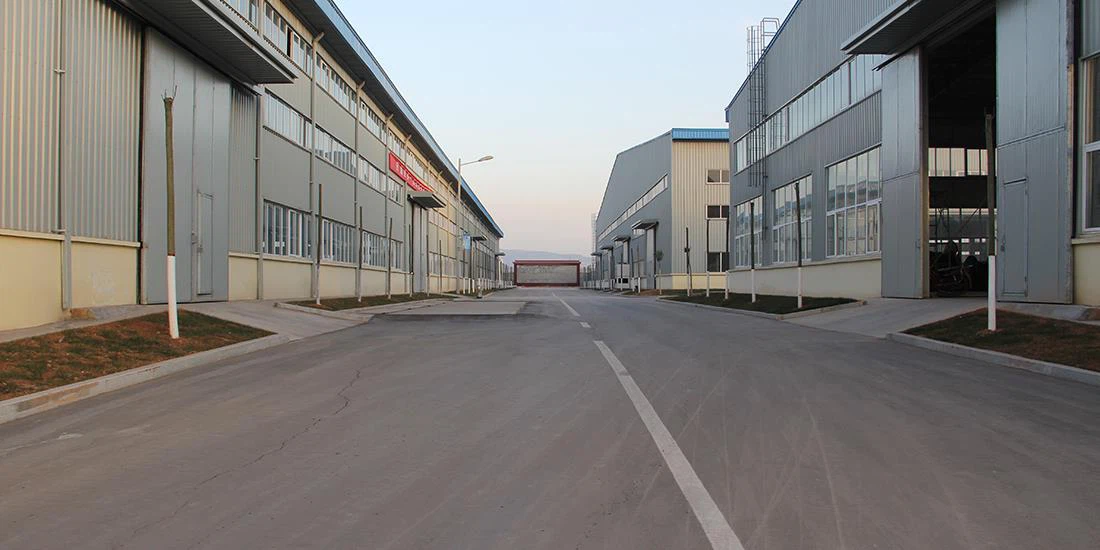
Taiyuan Simis Investment Casting Co., Ltd was established in 2014. After 15 years of development, it has developed from a single precision casting factory to a comprehensive mechanical product supplier that can provide precision casting, sand casting, die casting and precision machining parts. Our company has 3 professor-level engineers, 5 senior engineers, 12 junior engineers, 20 inspectors and about 350 workers. There are one precision casting factory, one sand casting factory, one die casting factory and two machining factories. After the unremitting efforts of our all employees, our company has passed ISO, TS16949, TUV and other quality certifications.
Our sales have gradually increased from the original 3 million RMB to the current 50 million RMB.
We understand the design and quality requirements of foreign customers for mechanical products. About 85% of our products are exported to North America, Europe and around the world.




FAQ
Q: What is gears?
Q: Why do we need gears?
Q: How do you describe a gear?
A toothed wheel.
Working relation, position, order, or adjustment. Got her career in gear.
A level or pace of functioning. Kicked their performance into high gear.
Q: What is the purpose of gear?
Q: Why is gear used?
Q: What is a gear example?
Q: What is a gear and its types?
Q: What is the rule of gears?
Q: What is the function of the gears?
Q: What is the theory of gears?
Q: How do you protect gears?
Q: What are the basics of gears?
Q: How do you maintain gears?
2. Apply the correct amount.
3. Clean and inspect the gears.
4. Adjust and align the gears.
5. Protect the gears from harsh conditions.
6. Schedule regular maintenance.
7. Here's what else to consider.
Q: What are the three main purposes of gears?
Q: What is the basic of gear?
Q: How do gears work for speed?
Q: How do you increase gear life?
Manufacture with precision.
Proper gear maintenance.
The whole package.
Q: Why do gears speed up?
Q: How does gear work?
Q: What are the three main functions of gears?
To reverse the direction of rotation.
To increase or decrease the speed of rotation.
To move rotational motion to a different axis.
To keep the rotation of two axes synchronized.
Find professional gear manufacturers and suppliers in China here. Please feel free to buy high quality gear at competitive price from our factory. For customized service, contact us now.