

Hey there! As a supplier in the sand casting industry, I'm super stoked to share with you all about the pouring process in sand casting. It's a crucial step that can make or break the quality of the final product, so let's dive right in!
What's Sand Casting Anyway?
Before we get into the pouring part, let's quickly go over what sand casting is. It's one of the oldest and most widely used metal casting processes. The basic idea is to create a mold out of sand and then pour molten metal into it. Once the metal cools and solidifies, you get a part that matches the shape of the mold. It's a versatile process that can be used to make all sorts of parts, from small components to large industrial pieces.
The Pouring Process: Step by Step
Now, let's talk about the pouring process itself. It's a multi - step operation that requires careful planning and execution.
Step 1: Preparing the Molten Metal
The first thing we need to do is get the metal ready for pouring. This involves melting the metal in a furnace. The type of furnace we use depends on the metal we're working with. For example, if we're casting aluminum, we might use an electric furnace, while for iron, a cupola furnace could be the go - to choice.
We have to make sure the metal is at the right temperature. If it's too cold, it might not flow properly into all the nooks and crannies of the mold, leading to incomplete castings. On the other hand, if it's too hot, it can cause problems like excessive shrinkage or even damage the mold. We constantly monitor the temperature using thermocouples to keep it within the optimal range.
Step 2: Preparing the Mold
While the metal is melting, we're also getting the sand mold ready. The mold is made up of two halves, the cope and the drag. These are usually made by packing sand around a pattern, which is a replica of the part we want to cast. The sand is mixed with a binder to hold its shape.
We need to make sure the mold is clean and free of any debris. Any foreign particles in the mold can end up in the casting, causing defects. We also check for proper venting. Vents are small channels in the mold that allow gases to escape during the pouring process. Without proper venting, the gases can get trapped in the metal, creating porosity in the casting.
Step 3: Pouring the Molten Metal
Once the metal is at the right temperature and the mold is ready, it's time for the actual pouring. We use a ladle to transfer the molten metal from the furnace to the mold. The pouring has to be done carefully and steadily.
We start by pouring the metal into a pouring basin at the top of the mold. From there, the metal flows through a sprue, which is a vertical channel, and then into the runners and gates that distribute the metal throughout the mold cavity. The speed of pouring is crucial. If we pour too fast, the metal can splash and cause turbulence, which can lead to defects like inclusions. If we pour too slow, the metal might start to solidify before it fills the entire mold.
Step 4: Cooling and Solidification
After the mold is filled with molten metal, we just have to wait for it to cool and solidify. The cooling rate affects the microstructure of the metal and, therefore, its mechanical properties. In some cases, we might use techniques to control the cooling rate, like adding chills (metal blocks) to the mold to speed up cooling in certain areas.
Once the metal has solidified, we break open the sand mold to remove the casting. This is called shakeout. After shakeout, the casting still has some excess material, like the sprue, runners, and gates, which we remove through a process called fettling.
Quality Control in the Pouring Process
Quality control is a big deal in the pouring process. We use a variety of techniques to ensure that the castings meet the required standards.
One of the most common methods is visual inspection. We look for obvious defects like cracks, porosity, or incomplete filling. We also use non - destructive testing methods, such as ultrasonic testing or X - ray inspection, to detect internal defects that might not be visible to the naked eye.

Chemical analysis is another important aspect. We want to make sure the metal has the right chemical composition. This is done by taking samples from the casting and analyzing them in a laboratory.
Applications of Sand Casting
Sand casting is used in a wide range of industries. For example, in the automotive industry, it's used to make parts like Gear Box Casting. These parts need to be strong and durable, and sand casting can produce them with the required precision and quality.
In the machinery industry, Sand Casting Reducer Housing is often made using sand casting. These housings protect the gears and other components of a reducer, and sand casting allows for the production of complex shapes.
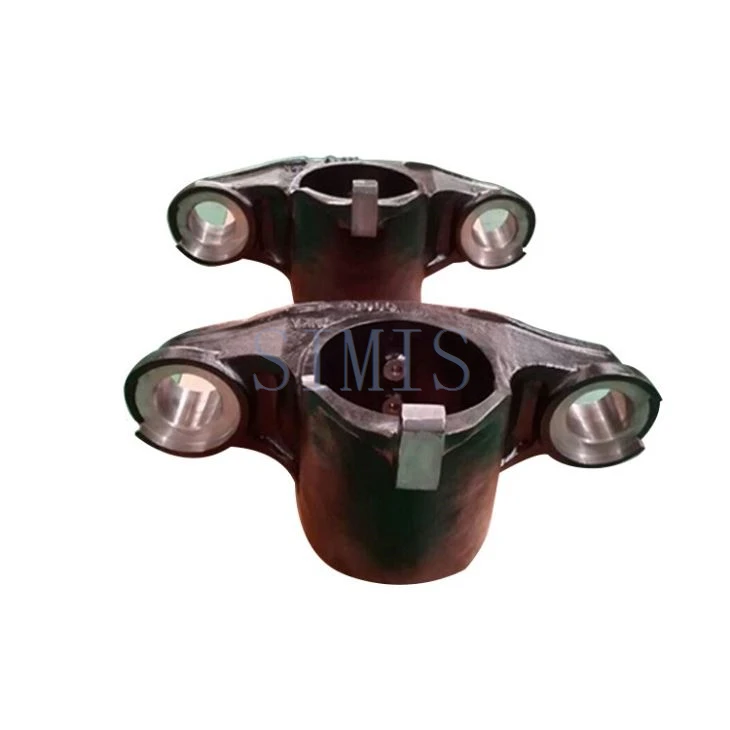
The railway industry also relies on sand casting for parts like Axle Box. Axle boxes are critical components that support the axle and allow it to rotate smoothly. Sand casting can produce axle boxes with the necessary strength and dimensional accuracy.
Why Choose Us as Your Sand Casting Supplier?
As a sand casting supplier, we've got a lot going for us. We've been in the business for years, and we've built up a wealth of experience and expertise. We use the latest technology and equipment to ensure the highest quality castings.
Our team of skilled workers is dedicated to providing top - notch service. We work closely with our customers to understand their needs and requirements, and we're always willing to go the extra mile to meet their expectations.
We also offer competitive pricing. We know that cost is an important factor for our customers, so we strive to keep our prices reasonable without compromising on quality.
Let's Connect!
If you're in the market for sand - cast parts, I'd love to hear from you. Whether you need a small batch of custom - made components or a large - scale production run, we've got you covered. We can provide you with samples, quotes, and all the information you need to make an informed decision. So, don't hesitate to reach out and start a conversation about your sand casting needs.
References
- Campbell, J. (2003). Castings. Butterworth - Heinemann.
- Flemings, M. C. (1974). Solidification Processing. McGraw - Hill.
- Kalpakjian, S., & Schmid, S. R. (2009). Manufacturing Engineering and Technology. Pearson Prentice Hall.