

Hey there, fellow car enthusiasts! I'm an expert from a Car Exhaust Flange supplier, and today we're going to dig deep into the world of car exhaust systems, specifically focusing on what the optimal backpressure is for a car exhaust system with a flange.
First off, let's understand what backpressure is. In simple terms, backpressure is the resistance that the exhaust gases face as they try to exit the engine through the exhaust system. It's like trying to push water through a narrow pipe; the narrower the pipe, the more resistance you'll encounter. In a car exhaust system, this resistance can have a significant impact on the engine's performance.
Now, you might be wondering why backpressure is even a thing. Well, it's not all bad. A certain amount of backpressure is actually necessary for the proper functioning of an engine. When the exhaust valves open, the high - pressure exhaust gases rush out. A bit of backpressure helps to prevent the fresh air - fuel mixture from getting sucked out of the cylinders during the intake stroke. It also helps in maintaining a stable flow of exhaust gases, which can improve the scavenging effect. Scavenging is the process of getting rid of the exhaust gases from the cylinders and filling them with a fresh air - fuel mixture.
But here's the catch: too much backpressure can be a real problem. If the backpressure is too high, the engine has to work harder to push the exhaust gases out. This means that more energy is wasted, and the engine's power output decreases. You might notice a loss of acceleration, reduced fuel efficiency, and even an increase in engine temperature.
So, what's the optimal backpressure for a car exhaust system with a flange? Well, it depends on several factors.
Engine Design
The type of engine plays a huge role. For example, a naturally aspirated engine and a turbocharged engine have different requirements. A naturally aspirated engine typically needs a bit more backpressure to ensure proper scavenging. On the other hand, a turbocharged engine can tolerate lower backpressure because the turbocharger helps in pushing the exhaust gases out.
Exhaust System Configuration
The length, diameter, and shape of the exhaust pipes, as well as the number and type of mufflers and catalytic converters, all affect backpressure. A shorter and wider exhaust pipe will generally have lower backpressure compared to a longer and narrower one. Mufflers and catalytic converters add to the resistance, so the more of them you have, the higher the backpressure.
Vehicle Usage
If you're using your car for daily commuting, a slightly higher backpressure might be okay as long as it doesn't cause a significant drop in fuel efficiency. However, if you're into racing or high - performance driving, you'll want to keep the backpressure as low as possible to maximize power output.
As a Car Exhaust Flange supplier, we know how important it is to get the right flange for your exhaust system. A well - designed flange can help in reducing leaks and ensuring a smooth flow of exhaust gases. Our Car Exhaust Flange is made from high - quality alloy steel using the lost - wax investment casting process. This ensures a precise fit and excellent durability.
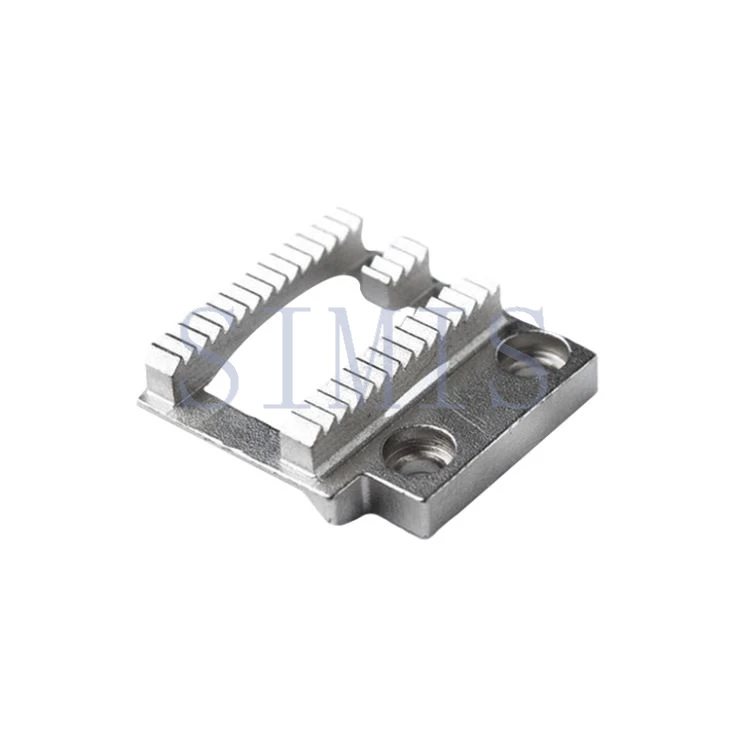

Now, let's talk about how our products can contribute to achieving the optimal backpressure. Our flanges are designed to have a smooth inner surface, which reduces turbulence in the exhaust flow. Turbulence can increase backpressure, so by minimizing it, we help in maintaining a more efficient exhaust system.
We also offer a variety of flange sizes and shapes to fit different exhaust system configurations. Whether you have a custom - built exhaust or a stock one, we can provide the right flange for you.
In addition to car exhaust flanges, we also have other casting products in our portfolio. For example, our Sewing Machine Casting is made with the same high - quality standards. And if you're in the market for fan blades, our Fans Blades Casting is a great option.
If you're looking to optimize your car's exhaust system and achieve the perfect backpressure, getting the right components is crucial. Our car exhaust flanges are designed to work in harmony with your exhaust system to help you get the most out of your engine.
Whether you're a car mechanic, a car enthusiast building your dream car, or a business looking to source high - quality car exhaust flanges, we're here to help. We can provide you with the technical support and advice you need to make the right choice.
So, if you're interested in our products and want to discuss your requirements, don't hesitate to reach out. We're always happy to have a chat and see how we can help you optimize your car's performance.
References
- Heywood, J. B. (1988). Internal Combustion Engine Fundamentals. McGraw - Hill.
- Crolla, D. A. (2001). Vehicle Dynamics. SAE International.
- Taylor, C. F. (1966). The Internal - Combustion Engine in Theory and Practice. MIT Press.