

As a trusted supplier of instrumentation parts, I've witnessed firsthand the critical role these components play in various industries. One of the most fascinating aspects of instrumentation parts is how they transmit signals, a process that is fundamental to their functionality. In this blog post, I'll explore the different signal transmission methods used in instrumentation parts, shedding light on their principles, advantages, and applications.
Electrical Signal Transmission
Electrical signal transmission is perhaps the most common method used in instrumentation parts. It involves the use of electrical currents or voltages to carry information from one point to another. This method is favored for its simplicity, reliability, and compatibility with a wide range of electronic devices.
Voltage Signaling
Voltage signaling is a straightforward way to transmit information. In this method, the magnitude of the voltage represents the value of the measured variable. For example, in a temperature sensor, a change in temperature might cause a corresponding change in the output voltage. This voltage can then be measured and processed by a control system to determine the actual temperature.
One of the advantages of voltage signaling is its simplicity. It requires minimal additional circuitry, making it cost - effective for many applications. However, it is also susceptible to noise interference, especially over long distances. To mitigate this issue, shielded cables are often used to protect the signal from external electromagnetic fields.
Current Signaling
Current signaling, on the other hand, is more resistant to noise compared to voltage signaling. In a current loop system, a constant current is maintained in the circuit, and the value of the measured variable is represented by the current level. For instance, in a 4 - 20 mA current loop, a 4 mA current might represent the minimum value of the measured variable, while 20 mA represents the maximum.
The 4 - 20 mA current loop is widely used in industrial instrumentation because it can transmit signals over long distances without significant signal degradation. It also allows for easy detection of open - circuit faults, as the current will drop to zero if there is a break in the loop.
Optical Signal Transmission
Optical signal transmission uses light to carry information. This method offers several advantages, including high bandwidth, immunity to electromagnetic interference, and the ability to transmit signals over long distances with low loss.
Fiber - Optic Communication
Fiber - optic cables are commonly used for optical signal transmission in instrumentation parts. These cables consist of thin strands of glass or plastic that can carry light signals. In a fiber - optic system, an electrical signal is first converted into an optical signal using a light - emitting diode (LED) or a laser diode. The optical signal then travels through the fiber - optic cable and is converted back into an electrical signal at the receiving end.
Fiber - optic communication is ideal for applications where high - speed data transfer is required, such as in modern communication networks and some advanced instrumentation systems. It is also used in harsh environments where electrical signals might be affected by electromagnetic interference or where there is a risk of electrical sparks.
Infrared Signaling
Infrared signaling is another form of optical signal transmission. It uses infrared light, which is invisible to the human eye, to transmit data. Infrared signals are commonly used in remote controls and some short - range communication applications.
In instrumentation parts, infrared signaling can be used for non - contact measurement and communication. For example, an infrared sensor can be used to measure the temperature of an object without making physical contact. The sensor detects the infrared radiation emitted by the object and converts it into an electrical signal that can be processed to determine the temperature.
Wireless Signal Transmission
Wireless signal transmission has become increasingly popular in recent years, thanks to the development of advanced wireless technologies. It offers the advantage of flexibility, as it eliminates the need for physical cables.
Radio Frequency (RF) Communication
RF communication uses radio waves to transmit signals. There are various RF standards available, such as Wi - Fi, Bluetooth, and ZigBee. Each standard has its own characteristics in terms of range, data rate, and power consumption.
In instrumentation parts, RF communication can be used for remote monitoring and control. For example, in a smart building system, sensors can be connected wirelessly to a central control unit using RF technology. This allows for easy installation and reconfiguration of the system, as there is no need to run cables throughout the building.
Ultrasonic Signaling
Ultrasonic signaling uses high - frequency sound waves to transmit information. Ultrasonic sensors are commonly used in distance measurement, level sensing, and flow measurement applications.
In an ultrasonic distance measurement system, an ultrasonic pulse is emitted from a transducer, and the time it takes for the pulse to bounce back from an object is measured. Based on the speed of sound in the medium, the distance to the object can be calculated. Ultrasonic signaling is suitable for applications where non - contact measurement is required and where the environment is not conducive to other forms of signal transmission.
Applications of Different Signal Transmission Methods
The choice of signal transmission method depends on the specific requirements of the application. For example, in industrial automation, where reliability and long - distance communication are crucial, current signaling or fiber - optic communication might be preferred. In consumer electronics, wireless technologies such as Bluetooth are often used for their convenience and ease of use.
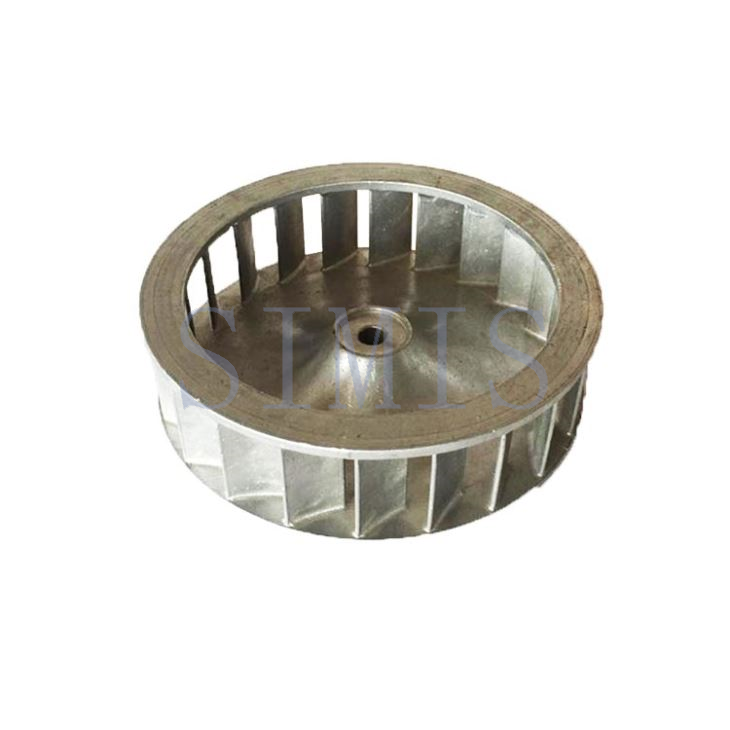

As a supplier of instrumentation parts, we offer a wide range of products that utilize different signal transmission methods. Our Aluminum Turbine is designed with precision to ensure accurate signal transmission in power generation and aerospace applications. Our Aluminum Monitor Parts are equipped with advanced sensors that can use various signal transmission methods to provide real - time data monitoring. And our Aluminum Impeller Casting is optimized for efficient operation in fluid handling systems, where signal transmission is essential for process control.
Conclusion
In conclusion, the signal transmission methods of instrumentation parts are diverse and each has its own unique advantages and applications. Electrical, optical, and wireless signal transmission methods all play important roles in modern instrumentation systems. As technology continues to evolve, we can expect to see further improvements in signal transmission efficiency, reliability, and flexibility.
If you are in need of high - quality instrumentation parts or have any questions about signal transmission methods, we invite you to contact us for procurement and further discussion. Our team of experts is ready to assist you in finding the best solutions for your specific needs.
References
- Johnson, R. C. (2018). Instrumentation and Control Systems. McGraw - Hill Education.
- Smith, A. B. (2020). Wireless Sensor Networks: Principles and Practices. Wiley.
- Jones, C. D. (2019). Fiber - Optic Communication Technology. Prentice Hall.