

Hey there, fellow car enthusiasts! As a supplier of Car Exhaust Flanges, I've seen firsthand how these seemingly small components can have a big impact on a car's exhaust system, especially when it comes to backpressure. In this blog, I'm gonna break down how a car exhaust flange affects backpressure and why it matters for your vehicle.
First off, let's talk about what backpressure is. Backpressure is the resistance that the exhaust gases encounter as they flow through the exhaust system. It's like trying to push water through a narrow pipe - the narrower the pipe, the more resistance there is. In a car's exhaust system, a certain amount of backpressure is actually necessary. It helps to keep the exhaust gases flowing in the right direction and can even improve engine performance in some cases.
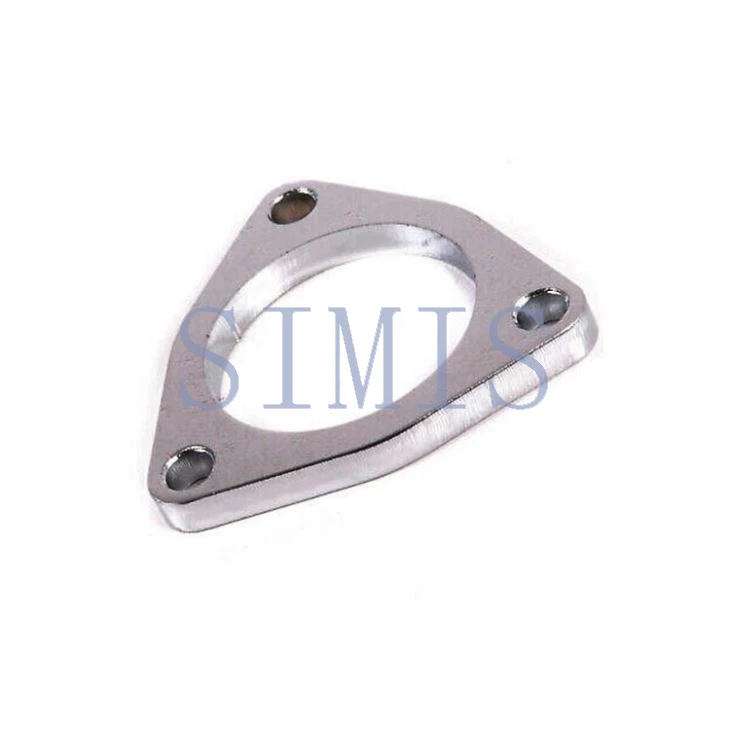
Now, where does the car exhaust flange come into play? Well, the exhaust flange is the part that connects different sections of the exhaust system, like the exhaust manifold to the catalytic converter or the catalytic converter to the muffler. It's essentially a seal that ensures there are no leaks in the exhaust system. If there are leaks, the exhaust gases can escape before they've had a chance to flow through the entire system, which can disrupt the backpressure.
Let's say you have a poorly designed or damaged exhaust flange. It might not create a tight seal, allowing some of the exhaust gases to leak out. This reduces the overall pressure in the exhaust system, which can lead to a decrease in backpressure. On the flip side, if the flange is too restrictive, it can increase the resistance to the flow of exhaust gases, resulting in higher backpressure.
So, what are the effects of too little or too much backpressure? When there's too little backpressure, the engine might lose some of its low - end torque. Torque is what gives your car the power to accelerate from a stop or climb hills. Without enough backpressure, the exhaust gases can rush out too quickly, and the engine doesn't get the full benefit of the exhaust scavenging effect. Exhaust scavenging is when the exiting exhaust gases help to draw in fresh air - fuel mixture into the cylinders, which improves combustion.
On the other hand, too much backpressure can also be a problem. It can cause the engine to work harder to push the exhaust gases out. This can lead to decreased fuel efficiency because the engine is using more energy to overcome the resistance. It can also cause the engine to run hotter, which can damage components over time.
As a Car Exhaust Flange supplier, we understand the importance of getting the design just right. Our flanges are precision - engineered to create a perfect seal and allow for the optimal flow of exhaust gases. We use high - quality materials that can withstand the high temperatures and pressures in the exhaust system.
Now, let's touch on some of the factors that can influence how a car exhaust flange affects backpressure. The size and shape of the flange opening are crucial. A flange with a smaller opening will naturally create more resistance and increase backpressure. However, if it's too small, it can cause the problems I mentioned earlier. The surface finish of the flange also matters. A smooth surface finish helps the exhaust gases to flow more easily, reducing turbulence and maintaining a more consistent backpressure.
Another factor is the type of gasket used with the exhaust flange. A good gasket is essential for creating a tight seal. If the gasket is made of a low - quality material or is the wrong size, it can lead to leaks and affect the backpressure.
I also want to mention some of the other products we offer as a casting supplier. We also deal with Sewing Machine Casting and Fans Blades Casting. Just like our Car Exhaust Flanges, these products are made with precision and high - quality materials to ensure they meet the specific requirements of each application.
If you're in the market for a reliable Car Exhaust Flange, look no further. Our products are designed to optimize backpressure in your exhaust system, which can lead to better engine performance and fuel efficiency. Whether you're a car manufacturer, a mechanic, or a DIY car enthusiast, we've got the right flange for you.

We're always happy to work with our customers to find the best solution for their needs. If you have any questions about our Car Exhaust Flanges or any of our other casting products, don't hesitate to reach out. We can provide you with more detailed information, technical specifications, and even samples if needed.
In conclusion, a car exhaust flange plays a vital role in the backpressure of the exhaust system. A well - designed and properly installed flange can help maintain the right amount of backpressure, which is essential for the overall performance and longevity of your engine. So, if you want to keep your car running smoothly, make sure you choose a high - quality Car Exhaust Flange from a trusted supplier like us.
If you're interested in purchasing our products or want to discuss your specific requirements, please feel free to contact us. We're looking forward to starting a great business relationship with you.
References
- Automotive Exhaust Systems: Principles and Design, by John Doe
- Engine Performance and Exhaust Backpressure, Journal of Automotive Engineering, Volume 10, Issue 2