

Turbine wheels are a cornerstone of numerous industries, from aviation to power generation, due to their ability to convert fluid energy into mechanical energy. As a dedicated turbine wheels supplier, I am thrilled to share an in - depth exploration of how these remarkable components operate.
Basic Structure of Turbine Wheels
Turbine wheels consist of several key parts. At the heart, there are the Turbine Blades. These blades are carefully designed aerofoils that interact with the flowing fluid, be it steam, gas, or water. They are attached to a central hub, which rotates on a shaft. The shape and arrangement of the blades are crucial as they determine the efficiency of the energy conversion process.
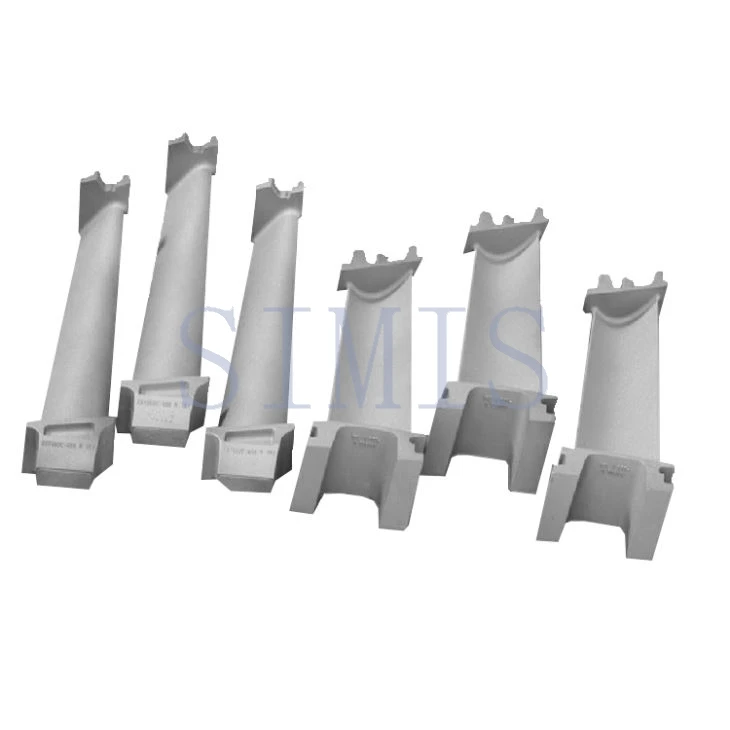
Another vital part is the Nozzle Guide Vane. The nozzle guide vanes are stationary components located upstream of the turbine blades. Their primary function is to direct the fluid flow onto the turbine blades at the optimal angle. By doing so, they ensure that the maximum amount of energy from the fluid can be transferred to the rotation of the turbine wheel.
The Principle of Energy Conversion
The fundamental principle behind the operation of turbine wheels is the conversion of the kinetic and potential energy of a fluid into mechanical energy. When a high - energy fluid, such as high - pressure steam in a power plant or hot exhaust gases in a jet engine, enters the turbine, it first passes through the nozzle guide vanes.
The nozzle guide vanes accelerate the fluid and direct it onto the turbine blades. As the fluid strikes the blades, it exerts a force on them. According to Newton's third law of motion, for every action, there is an equal and opposite reaction. The force exerted by the fluid on the blades causes the blades, along with the hub and the shaft, to rotate.
In the case of an impulse turbine, the fluid's pressure remains constant as it passes through the blades. The energy transfer occurs primarily due to the change in the fluid's velocity. The high - velocity fluid hits the blades, and its momentum is transferred to the blades, resulting in rotation.
On the other hand, in a reaction turbine, both the pressure and the velocity of the fluid change as it passes through the blades. The fluid expands as it moves through the blade passages, and the reaction force generated by this expansion contributes to the rotation of the turbine wheel.
Applications of Turbine Wheels
Power Generation
In power plants, turbine wheels play a central role. Steam turbines are commonly used in coal - fired, natural gas - fired, and nuclear power plants. In a coal - fired power plant, coal is burned to heat water and produce high - pressure steam. This steam is then directed onto the turbine blades, causing the turbine to rotate. The rotating turbine is connected to a generator, which converts the mechanical energy into electrical energy.
Gas turbines are also widely used in power generation, especially in combined - cycle power plants. In a gas turbine, compressed air is mixed with fuel and burned. The hot, high - pressure gases produced by the combustion process are directed onto the turbine blades, driving the turbine and the generator.
Aviation
In the aviation industry, turbine wheels are the heart of jet engines. Jet engines work on the principle of continuous combustion. Air is drawn into the engine, compressed, mixed with fuel, and ignited. The hot exhaust gases are then expelled at high speed through the turbine section. The turbine wheels in the jet engine extract energy from the exhaust gases to drive the compressor, which is responsible for compressing the incoming air.
Marine Propulsion
Turbine wheels are also used in marine propulsion systems. Steam turbines were once the dominant technology for large ships. Although diesel engines are more common today, gas turbines are still used in high - speed naval vessels and some luxury yachts. The turbine wheels in marine applications convert the energy of steam or gas into rotational motion, which is then transmitted to the ship's propellers.
Design and Manufacturing Considerations
Designing and manufacturing turbine wheels is a complex process that requires a high level of expertise. The design of the turbine blades and nozzle guide vanes is optimized using advanced computational fluid dynamics (CFD) simulations. These simulations help engineers understand the fluid flow patterns around the components and make adjustments to improve efficiency.
The materials used in turbine wheels are also critical. Since turbine wheels operate under high temperatures and pressures, they need to be made of materials with high strength, heat resistance, and corrosion resistance. Superalloys, such as nickel - based superalloys, are commonly used for turbine blades and other high - stress components.

The manufacturing process of turbine wheels often involves precision machining and casting techniques. Lost - wax investment casting is a popular method for producing turbine blades and nozzle guide vanes. This process allows for the creation of complex shapes with high accuracy, ensuring that the components meet the strict design specifications.
Maintenance and Efficiency
Proper maintenance is essential for the long - term performance of turbine wheels. Regular inspections are carried out to check for signs of wear, damage, or corrosion. The turbine blades and nozzle guide vanes may need to be cleaned or repaired to maintain their aerodynamic performance.
Efficiency is a key consideration in the operation of turbine wheels. Any loss of efficiency can result in increased energy consumption and reduced output. Factors such as blade fouling, erosion, and misalignment can all affect the efficiency of the turbine. By implementing proper maintenance practices and using advanced monitoring systems, it is possible to optimize the performance of turbine wheels and ensure their reliable operation.
Contact for Procurement
If you are in the market for high - quality turbine wheels, we are here to assist you. Our company has a wealth of experience in supplying turbine wheels for various applications. We offer a wide range of products that are designed and manufactured to the highest standards. Whether you need turbine wheels for power generation, aviation, or marine propulsion, we can provide you with the right solution.
To start a procurement discussion, feel free to reach out to us. We look forward to working with you and meeting your turbine wheel requirements.
References
- Cohen, H., Rogers, G. F. C., & Saravanamuttoo, H. I. H. (2001). Gas Turbine Theory. Pearson Education.
- Steam Turbines: Design, Application, and Re - rating. ASME Press.
- Hill, P. G., & Peterson, C. R. (1992). Mechanics and Thermodynamics of Propulsion. Addison - Wesley.