

Hey there! I'm a supplier in the superalloy casting business, and today I wanna chat about the standards for superalloy casting. Superalloys are pretty amazing materials, known for their high strength, excellent corrosion resistance, and great performance at high temperatures. They're used in all sorts of critical applications, like aerospace, power generation, and the automotive industry.
Chemical Composition
First off, let's talk about chemical composition. This is a big deal when it comes to superalloy casting. Different superalloys have specific alloying elements in precise amounts, and these elements determine the properties of the final product. For example, nickel-based superalloys are super popular because they have a high nickel content, usually over 50%. Nickel gives these alloys good oxidation resistance and high-temperature strength.
Other common alloying elements include chromium, which helps with corrosion resistance, and molybdenum, which boosts strength. Tungsten and rhenium are also used to enhance high-temperature performance. The chemical composition needs to be carefully controlled during the casting process. Even a small deviation can affect the alloy's properties. We use advanced analytical techniques, like spectroscopy, to make sure the composition is spot-on.
Microstructure
The microstructure of a superalloy is another key standard. The way the grains and phases are arranged in the material can have a huge impact on its mechanical properties. For instance, a fine-grained microstructure generally leads to better strength and ductility. In some cases, we want a single-crystal structure, especially for components like Turbine Blades. Single-crystal turbine blades have superior high-temperature strength and creep resistance because there are no grain boundaries to weaken the material.
We use special casting techniques, like directional solidification, to control the microstructure. This process involves cooling the molten alloy in a specific direction to encourage the growth of long, columnar grains or a single crystal. It's a tricky process, but it's essential for making high-quality superalloy components.
Mechanical Properties
Mechanical properties are obviously super important. Superalloy castings need to meet certain standards for strength, hardness, and ductility. These properties are tested using a variety of methods, like tensile testing, hardness testing, and impact testing.
Tensile testing measures the alloy's ability to withstand pulling forces. We look at things like the yield strength, which is the point at which the material starts to deform permanently, and the ultimate tensile strength, which is the maximum stress the material can handle before breaking. Hardness testing gives us an idea of how resistant the material is to indentation or scratching. And impact testing measures the alloy's toughness, or its ability to absorb energy without breaking.
The mechanical properties of superalloy castings can be affected by factors like the chemical composition, microstructure, and heat treatment. Heat treatment is often used to improve the mechanical properties by changing the microstructure. For example, annealing can relieve internal stresses and improve ductility, while aging can increase strength.
Dimensional Accuracy
Dimensional accuracy is crucial, especially for components that need to fit precisely into a larger system. Superalloy castings need to be made to very tight tolerances. We use advanced machining and finishing processes to ensure that the final dimensions are within the specified range.
In some cases, we use computer-aided design (CAD) and computer-aided manufacturing (CAM) technologies to create highly accurate molds and patterns. These technologies allow us to design and manufacture components with complex shapes and tight tolerances. We also use coordinate measuring machines (CMMs) to measure the dimensions of the castings and make sure they meet the requirements.
Surface Finish
The surface finish of a superalloy casting is also an important standard. A smooth surface finish can improve the component's performance and durability. It can reduce friction, prevent corrosion, and improve the appearance of the part.
We use a variety of finishing processes to achieve the desired surface finish. These can include grinding, polishing, and shot peening. Grinding and polishing are used to remove any rough spots or imperfections on the surface, while shot peening is used to create a compressive stress layer on the surface, which can improve the fatigue resistance of the material.
Defect Control
Defect control is a major concern in superalloy casting. Defects like porosity, cracks, and inclusions can significantly reduce the performance and reliability of the component. We have strict quality control measures in place to detect and prevent defects.
Porosity is one of the most common defects in superalloy castings. It can be caused by things like gas entrapment during the casting process or shrinkage during solidification. We use techniques like vacuum casting and degassing to reduce the amount of gas in the molten alloy and prevent porosity.
Cracks can occur due to thermal stresses, mechanical stresses, or improper heat treatment. We use non-destructive testing methods, like ultrasonic testing and X-ray testing, to detect cracks in the castings. If a crack is found, we may be able to repair it using welding or other techniques, or we may have to scrap the part.
Inclusions are foreign particles that can get into the molten alloy during the casting process. They can weaken the material and cause premature failure. We use filtration systems to remove inclusions from the molten alloy and ensure the quality of the castings.
Applications
Superalloy castings are used in a wide range of applications. One of the most common applications is in the aerospace industry. Components like Nozzle Guide Vane and turbine blades are made from superalloys because they need to withstand the high temperatures and stresses found in jet engines.
In the power generation industry, superalloy castings are used in gas turbines and steam turbines. These components need to have high strength and corrosion resistance to operate efficiently and reliably over long periods of time.

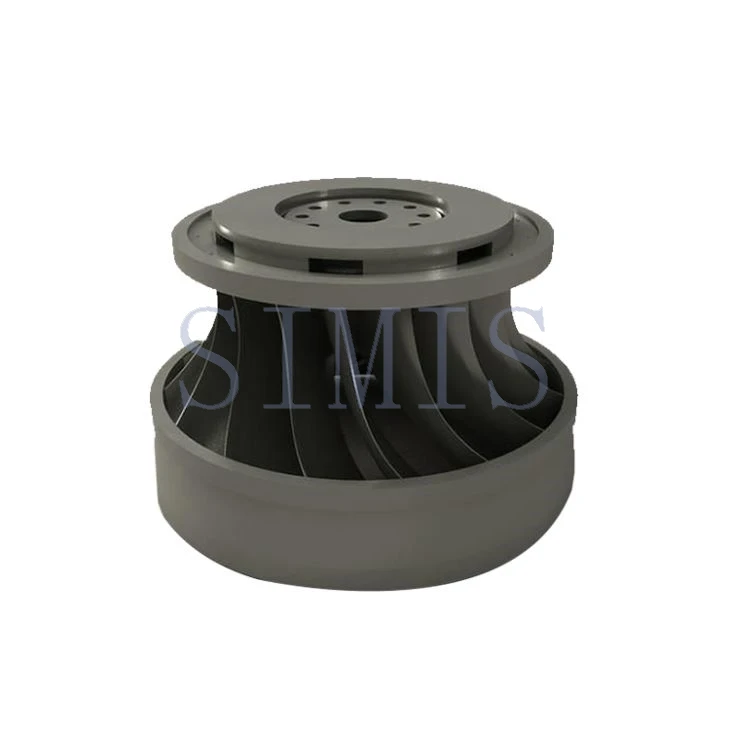
The automotive industry also uses superalloy castings in high-performance engines. Components like exhaust valves and turbocharger wheels are made from superalloys to improve the engine's performance and durability.
Meeting the Standards
As a superalloy casting supplier, we're committed to meeting all of these standards. We have a team of experienced engineers and technicians who are experts in superalloy casting. We use the latest technologies and equipment to ensure that our castings are of the highest quality.
We also have a comprehensive quality management system in place. This system includes everything from raw material inspection to final product testing. We follow strict procedures and guidelines to ensure that every casting we produce meets the customer's requirements.
Let's Connect
If you're in the market for high-quality superalloy castings, I'd love to talk to you. Whether you need a small batch of custom components or a large production run, we have the expertise and capabilities to meet your needs. We can work with you to develop the right superalloy casting solution for your application. So, don't hesitate to reach out and start a conversation about your procurement needs.
References
- Davis, J. R. (Ed.). (2000). Superalloys: A technical guide. ASM International.
- Sims, C. T., Stoloff, N. S., & Hagel, W. C. (Eds.). (1987). Superalloys II. Wiley-Interscience.
- Reed, R. C. (2006). The superalloys: Fundamentals and applications. Cambridge University Press.