

As a seasoned supplier of turbine wheels, I've witnessed firsthand the diverse requirements and preferences of our clients in various industries. One of the most common questions we encounter is about the differences between single - stage and multi - stage turbine wheels. In this blog post, I'll delve into the intricacies of these two types of turbine wheels, exploring their design, performance, applications, and more.
Design and Structure
Single - stage turbine wheels are relatively straightforward in design. They consist of a single set of turbine blades attached to a rotor. The simplicity of this design makes them easier and more cost - effective to manufacture. The blades are designed to extract energy from the working fluid (such as steam or gas) in a single pass. This design is often used when the energy conversion requirements are not overly complex or when space and cost are significant constraints.
On the other hand, multi - stage turbine wheels are more complex. They are composed of multiple sets of turbine blades arranged in series on the rotor. Each stage is designed to extract a portion of the energy from the working fluid. Between each stage, there are often Nozzle Guide Vane, which direct the flow of the working fluid onto the next set of blades at the optimal angle. This multi - stage design allows for a more efficient extraction of energy from the working fluid over multiple steps.
Performance Characteristics
Efficiency
Multi - stage turbine wheels generally offer higher efficiency compared to single - stage turbine wheels. In a single - stage turbine, the working fluid passes through the blades only once, and there is a limit to how much energy can be extracted in this single pass. As a result, some energy may be left in the fluid as it exits the turbine, leading to lower overall efficiency.
In contrast, multi - stage turbines can extract energy from the working fluid in multiple stages. Each stage can operate at its optimal conditions, gradually reducing the energy of the working fluid as it passes through the turbine. This step - by - step energy extraction process enables multi - stage turbines to achieve much higher efficiencies, especially when dealing with high - energy working fluids.
Power Output
The power output of a turbine is closely related to its efficiency and the amount of energy it can extract from the working fluid. Since multi - stage turbine wheels are more efficient, they can typically produce more power for the same amount of input energy compared to single - stage turbine wheels. For large - scale power generation applications, such as in power plants, multi - stage turbines are often the preferred choice due to their ability to generate high levels of power.
However, single - stage turbine wheels can still be suitable for applications where lower power output is required. They are often used in small - scale industrial processes or in applications where a compact and simple turbine design is needed.
Speed and Control
Single - stage turbine wheels can operate at relatively high speeds. Their simple design allows for a more direct transfer of energy from the working fluid to the rotor, enabling them to reach high rotational speeds quickly. This makes them suitable for applications where high - speed operation is required, such as in some aerospace and automotive turbochargers.
Multi - stage turbine wheels, on the other hand, may operate at lower speeds. The multi - stage design requires a more controlled flow of the working fluid between stages, and the additional components (such as nozzle guide vanes) can add some resistance to the flow. However, the speed of multi - stage turbines can be more precisely controlled. By adjusting the flow of the working fluid and the angle of the nozzle guide vanes, the speed and power output of the turbine can be finely tuned to meet the specific requirements of the application.
Applications
Single - Stage Turbine Wheels
Single - stage turbine wheels are commonly used in a variety of applications where simplicity, compactness, and cost - effectiveness are important.
- Turbochargers: In automotive and aerospace applications, single - stage turbine wheels are used in turbochargers. Turbochargers are designed to increase the power output of an engine by compressing the intake air. The single - stage turbine in a turbocharger is driven by the exhaust gases from the engine. Its high - speed operation allows it to quickly spin up and provide the necessary boost to the engine.
- Small - Scale Power Generation: In some remote or off - grid locations, single - stage turbines can be used for small - scale power generation. For example, in small hydroelectric plants or micro - wind turbines, single - stage turbines can be a cost - effective solution to generate electricity for local use.
Multi - Stage Turbine Wheels
Multi - stage turbine wheels are widely used in large - scale and high - efficiency applications.
- Power Plants: In steam power plants and gas power plants, multi - stage turbines are the workhorses of power generation. They can efficiently convert the thermal energy of steam or gas into mechanical energy, which is then converted into electrical energy by a generator. The high efficiency of multi - stage turbines is crucial for large - scale power generation, as it helps to reduce fuel consumption and operating costs.
- Industrial Processes: In some industrial processes, such as chemical plants and refineries, multi - stage turbines are used to drive large compressors and pumps. The precise control of speed and power output offered by multi - stage turbines makes them suitable for these applications, where the process requirements need to be met accurately.
Considerations for Selection
When choosing between single - stage and multi - stage turbine wheels, several factors need to be considered.
- Application Requirements: The specific requirements of the application, such as power output, efficiency, and speed, are the most important factors. If high efficiency and large power output are needed, multi - stage turbine wheels are usually the better choice. However, if simplicity, compactness, and cost - effectiveness are the main concerns, single - stage turbine wheels may be more suitable.
- Cost: The cost of manufacturing, installation, and maintenance is another important consideration. Single - stage turbine wheels are generally less expensive to manufacture and maintain due to their simpler design. Multi - stage turbine wheels, on the other hand, are more complex and may require more expensive components and higher - skilled maintenance personnel.
- Space Constraints: In some applications, space may be limited. Single - stage turbine wheels are more compact and can be a better fit in tight spaces. Multi - stage turbine wheels, with their additional components and larger size, may require more space for installation.
As a supplier of turbine wheels, we understand that each client's needs are unique. Whether you are looking for a single - stage turbine wheel for a small - scale application or a multi - stage turbine wheel for a large - scale power plant, we have the expertise and resources to provide you with the right solution. Our Turbine Blades are made from high - quality materials and are precision - engineered to ensure optimal performance.
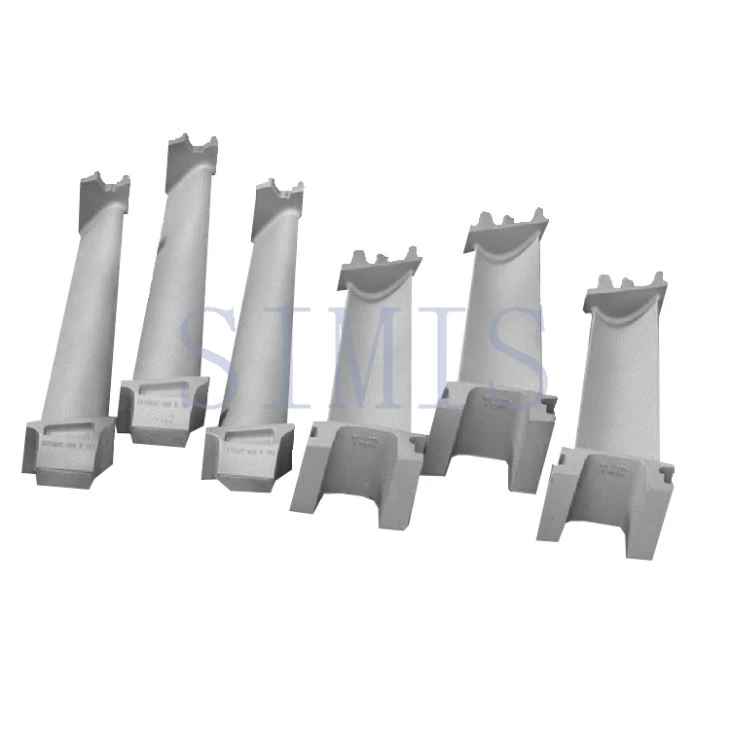

If you are interested in learning more about our turbine wheels or would like to discuss your specific requirements, we invite you to contact us for a detailed consultation. Our team of experts is ready to assist you in selecting the most suitable turbine wheel for your application and to provide you with a competitive quote.
References
- Rogers, G. F. C., & Mayhew, Y. R. (1995). Thermodynamic and Transport Properties of Fluids. Blackwell Science.
- Moran, M. J., & Shapiro, H. N. (2008). Fundamentals of Engineering Thermodynamics. John Wiley & Sons.
- Cohen, H., Rogers, G. F. C., & Saravanamuttoo, H. I. H. (2008). Gas Turbine Theory. Pearson Education.