

Hey there! As a supplier of superalloy castings, I've seen firsthand how crucial it is to understand the ins and outs of these high - performance materials. One of the key factors that can significantly impact the performance of superalloy castings is creep. So, let's dive into how creep affects the performance of superalloy castings.

First off, what exactly is creep? Creep is a time - dependent deformation that occurs under a constant load at elevated temperatures. In the world of superalloy castings, which are often used in high - temperature applications like aerospace engines and power generation turbines, creep can be a real game - changer.
Superalloy castings are designed to withstand extreme conditions, but creep can gradually wear them down. When a superalloy casting is exposed to high temperatures and a constant load, the atoms within the material start to move around. This movement causes the material to slowly deform over time. At first, the deformation might be so small that it's barely noticeable. But as time goes on, the effects of creep can become more and more significant.
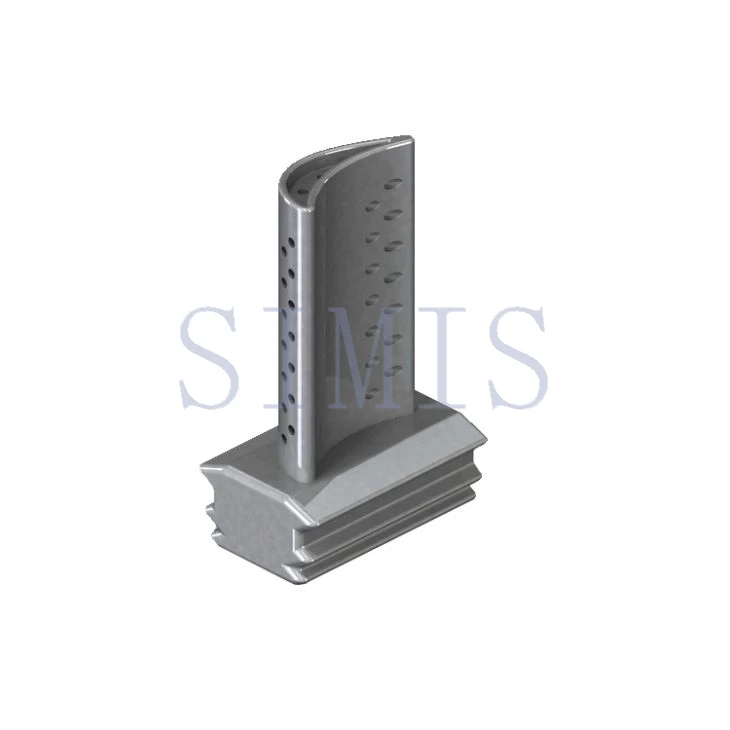
Let's take a look at some of the common superalloy castings in the industry, such as Nozzle Guide Vane and Turbine Blades. These components are at the heart of many high - performance engines. In an aerospace engine, for example, the nozzle guide vane directs the flow of hot gases, while the turbine blades convert the energy of these gases into mechanical power.
Creep can have a major impact on the performance of these components. For nozzle guide vanes, creep can cause them to warp or change shape. This change in shape can disrupt the flow of hot gases, reducing the efficiency of the engine. If the vane deforms too much, it might even lead to a misalignment of the gas flow, which can cause uneven wear on other engine parts.
Turbine blades are also highly susceptible to creep. As they spin at high speeds in a high - temperature environment, the constant centrifugal forces and heat can cause creep deformation. A deformed turbine blade can experience reduced aerodynamic efficiency, leading to a decrease in power output. In severe cases, the blade might even crack or break off, which can be catastrophic for the engine.
Now, let's talk about the factors that influence creep in superalloy castings. Temperature is one of the most critical factors. The higher the temperature, the more likely creep is to occur and the faster it will progress. This is because at higher temperatures, the atoms in the superalloy have more energy, making it easier for them to move and cause deformation.
The applied stress also plays a big role. The greater the load on the superalloy casting, the more likely it is to experience creep. For example, in a turbine engine, the blades are subjected to high centrifugal forces as they rotate. These forces create a significant amount of stress on the blades, increasing the risk of creep.
The microstructure of the superalloy is another important factor. Different superalloys have different microstructures, which can affect their resistance to creep. For instance, some superalloys have a fine - grained microstructure, which can provide better creep resistance at lower temperatures. On the other hand, coarse - grained superalloys might be more suitable for high - temperature applications where creep resistance is crucial.
So, what can be done to mitigate the effects of creep in superalloy castings? One approach is to use advanced alloy design. By carefully selecting the alloying elements and their proportions, it's possible to create a superalloy with improved creep resistance. For example, adding elements like rhenium, tungsten, and molybdenum can enhance the strength of the superalloy at high temperatures, reducing the likelihood of creep.
Another method is to optimize the manufacturing process. Precise control of the casting process can help to create a more uniform microstructure in the superalloy. This uniformity can improve the material's resistance to creep. For instance, using advanced casting techniques like single - crystal casting can produce superalloy components with superior creep properties.
Heat treatment is also an important step. Proper heat treatment can modify the microstructure of the superalloy, making it more resistant to creep. For example, a solution heat treatment followed by an aging treatment can precipitate fine particles within the superalloy, which can pin the dislocations and prevent them from moving, thus reducing creep.
In addition to these technical solutions, regular monitoring and maintenance are essential. By regularly inspecting superalloy castings for signs of creep, it's possible to detect problems early and take corrective action. Non - destructive testing methods, such as ultrasonic testing and eddy - current testing, can be used to detect internal defects and signs of creep in the components.
As a superalloy casting supplier, I understand the importance of providing high - quality products that can withstand the challenges of creep. We work closely with our customers to understand their specific requirements and develop customized solutions. Whether it's for aerospace, power generation, or other high - temperature applications, we're committed to delivering superalloy castings that offer excellent creep resistance and long - term performance.
If you're in the market for superalloy castings and want to learn more about how we can help you deal with the issue of creep, don't hesitate to reach out. We're here to have a detailed discussion about your project and provide you with the best possible solutions. Contact us today to start the procurement negotiation and take your high - performance applications to the next level.
References
- Davis, J. R. (Ed.). (2000). Superalloys: A technical guide. ASM International.
- Suresh, S. (1998). Fatigue of materials. Cambridge University Press.
- Sims, C. T., Stoloff, N. S., & Hagel, W. C. (Eds.). (1987). Superalloys II. Wiley.