

In the evolving landscape of automotive technology, hybrid vehicles have emerged as a significant innovation, offering a blend of traditional combustion engine power and electric propulsion. This unique combination not only enhances fuel efficiency but also reduces emissions, making hybrids an increasingly popular choice for environmentally conscious consumers. At the heart of a hybrid vehicle's exhaust system lies a crucial component: the car exhaust flange. As a leading supplier of Car Exhaust Flange, I am excited to delve into the intricacies of how this seemingly simple part plays a vital role in the overall performance of hybrid vehicles.
The Basics of a Car Exhaust Flange
Before we explore the specific functions of an exhaust flange in a hybrid vehicle, let's first understand what it is and its general purpose. An exhaust flange is a flat, circular or rectangular piece of metal with holes drilled around its perimeter. It is typically made from high - strength materials such as stainless steel or cast iron, which can withstand the high temperatures and corrosive gases produced by the engine.
The primary function of an exhaust flange is to connect different sections of the exhaust system together. In a hybrid vehicle, just like in a conventional car, the exhaust system is composed of multiple components, including the exhaust manifold, catalytic converter, muffler, and tailpipe. The exhaust flange acts as a secure joint between these components, ensuring that the exhaust gases flow smoothly through the system without any leaks.
The Exhaust System in a Hybrid Vehicle
Hybrid vehicles have a more complex exhaust system compared to traditional gasoline - powered cars. This is because they combine an internal combustion engine (ICE) with an electric motor. When the vehicle is operating in electric - only mode, the ICE is shut off, and there is no exhaust gas production. However, when the ICE kicks in, the exhaust system must be ready to handle the flow of gases.
The exhaust system in a hybrid vehicle serves several important functions. Firstly, it routes the exhaust gases away from the engine and the passenger compartment, protecting the occupants from harmful pollutants such as carbon monoxide, nitrogen oxides, and particulate matter. Secondly, it reduces the noise produced by the engine through the use of mufflers and resonators. Thirdly, it contains a catalytic converter, which is responsible for converting harmful exhaust gases into less harmful substances through a series of chemical reactions.
How the Exhaust Flange Works in a Hybrid Vehicle
1. Secure Connection
One of the most critical roles of the exhaust flange in a hybrid vehicle is to provide a secure connection between the different components of the exhaust system. The ICE in a hybrid vehicle can still generate high - pressure exhaust gases when it is running. If the exhaust flange does not provide a tight seal, these gases can leak out, leading to a decrease in engine performance, increased emissions, and a noisy exhaust system.
The exhaust flange is designed to be bolted or clamped tightly to the mating surfaces of the exhaust components. This ensures that there is no gap between the flanges, preventing exhaust gases from escaping. In a hybrid vehicle, where the ICE may start and stop frequently, the exhaust flange must be able to maintain its seal under varying conditions, including temperature changes and vibrations.
2. Thermal Expansion and Contraction
Another challenge that the exhaust flange in a hybrid vehicle must overcome is thermal expansion and contraction. When the ICE is running, the exhaust system heats up significantly. The exhaust flange, along with the other components of the exhaust system, expands due to the increase in temperature. Conversely, when the ICE shuts off, the exhaust system cools down, and the components contract.
The exhaust flange must be able to accommodate these changes in size without losing its seal. High - quality exhaust flanges are made from materials that have similar coefficients of thermal expansion to the other components of the exhaust system. This helps to ensure that the flange and the mating surfaces expand and contract at the same rate, reducing the risk of leaks.
3. Compatibility with Hybrid - Specific Components
Hybrid vehicles often have unique exhaust system components that are designed to work in conjunction with the electric motor and the ICE. For example, some hybrid vehicles may have a smaller exhaust manifold or a more advanced catalytic converter. The exhaust flange must be compatible with these hybrid - specific components to ensure proper installation and functionality.

As a Car Exhaust Flange supplier, we understand the importance of compatibility. We work closely with automotive manufacturers to develop exhaust flanges that are specifically designed for hybrid vehicles. Our flanges are engineered to fit seamlessly with the unique exhaust system components of different hybrid models, ensuring optimal performance and reliability.
The Manufacturing Process of Car Exhaust Flanges
The manufacturing process of car exhaust flanges is crucial in determining their quality and performance. At our company, we use advanced manufacturing techniques such as lost - wax investment casting to produce high - precision exhaust flanges.
Lost - wax investment casting is a process that allows us to create complex shapes with high accuracy. We start by creating a wax pattern of the exhaust flange. This wax pattern is then coated with a ceramic shell, which is hardened by heating. The wax is then melted out of the shell, leaving behind a hollow cavity in the shape of the exhaust flange. Molten metal, such as stainless steel or cast iron, is then poured into the cavity, filling it completely. After the metal has cooled and solidified, the ceramic shell is broken away, revealing the finished exhaust flange.
This manufacturing process offers several advantages. Firstly, it allows us to produce exhaust flanges with intricate designs and precise dimensions. This is particularly important for hybrid vehicles, where the exhaust system components may have unique shapes and sizes. Secondly, lost - wax investment casting produces exhaust flanges with a smooth surface finish, which reduces the risk of leaks and improves the flow of exhaust gases.
Other Casting Products Related to the Automotive Industry
In addition to car exhaust flanges, we also offer other casting products that are relevant to the automotive industry. For example, we produce Fans Blades Casting using the same high - quality lost - wax investment casting process. Fan blades are an essential component of the engine cooling system in both hybrid and conventional vehicles. They help to circulate air through the radiator, preventing the engine from overheating.
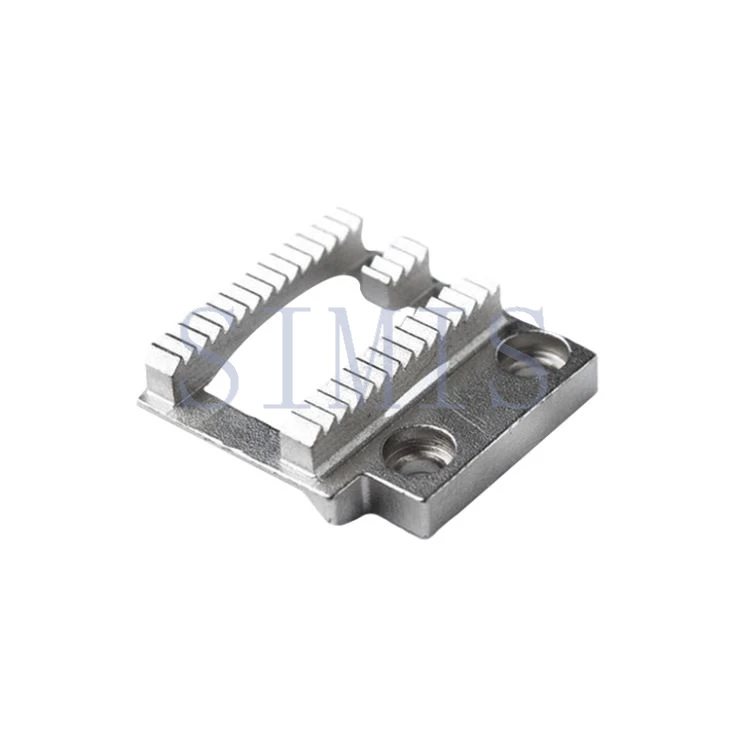
We also manufacture Sewing Machine Casting. Although it may seem unrelated to the automotive industry at first glance, many of the manufacturing techniques and materials used in sewing machine casting are also applicable to the production of automotive components. Our expertise in casting allows us to produce high - quality parts for a wide range of industries.
Contact for Procurement
If you are in the market for high - quality car exhaust flanges or other casting products, we would be delighted to hear from you. Our team of experts is dedicated to providing the best products and services to our customers. Whether you are an automotive manufacturer, a repair shop, or an individual enthusiast, we can offer you the right solutions for your needs.
We are committed to continuous improvement and innovation in our manufacturing processes. Our products are designed to meet the highest standards of quality and performance, ensuring that they will serve you well in the long run. If you have any questions or would like to discuss your procurement requirements, please do not hesitate to contact us.
References
- Heywood, J. B. (1988). Internal Combustion Engine Fundamentals. McGraw - Hill.
- Bosch Automotive Handbook (7th Edition). Robert Bosch GmbH.
- Society of Automotive Engineers (SAE) Technical Papers.