

In the realm of power generation and aerospace engineering, turbines play a pivotal role in converting the energy of a working fluid into mechanical energy. At the heart of these turbines are the turbine blades, which interact with the working fluid in a complex and fascinating manner. As a leading Turbine Blades supplier, I am excited to delve into the intricacies of this interaction and shed light on the key factors that influence it.
Understanding the Basics of Turbine Blades and Working Fluids
Before we explore the interaction between turbine blades and the working fluid, let's first understand the basic components involved. Turbine blades are airfoil-shaped structures that are mounted on the rotor of a turbine. They are designed to extract energy from the working fluid, which can be a gas or a liquid, and convert it into rotational motion. The working fluid, on the other hand, is the medium that carries the energy and transfers it to the turbine blades.
The most common working fluids used in turbines are steam and gas. In steam turbines, water is heated to produce steam, which is then directed onto the turbine blades. In gas turbines, a mixture of fuel and air is burned to produce hot gases, which are then expanded through the turbine. The choice of working fluid depends on the specific application and the desired performance of the turbine.
Aerodynamics of Turbine Blades
The interaction between turbine blades and the working fluid is primarily governed by the principles of aerodynamics. When the working fluid flows over the turbine blades, it creates a pressure difference between the upper and lower surfaces of the blades. This pressure difference generates a lift force, which causes the blades to rotate. The shape and design of the turbine blades are carefully optimized to maximize the lift force and minimize the drag force, which is the resistance to the flow of the working fluid.
One of the key factors that influence the aerodynamics of turbine blades is the angle of attack. The angle of attack is the angle between the chord line of the blade and the direction of the incoming working fluid. By adjusting the angle of attack, the lift and drag forces can be controlled. However, if the angle of attack is too large, the flow over the blade can separate, leading to a significant increase in drag and a decrease in lift. This phenomenon is known as stall and can have a detrimental effect on the performance of the turbine.
Another important aspect of the aerodynamics of turbine blades is the boundary layer. The boundary layer is a thin layer of fluid that forms on the surface of the blade due to the viscosity of the working fluid. The thickness and behavior of the boundary layer can have a significant impact on the performance of the turbine. For example, a laminar boundary layer is more efficient than a turbulent boundary layer because it has lower drag. However, a laminar boundary layer is also more prone to separation, which can lead to stall. Therefore, turbine blade designers often use techniques such as boundary layer control to optimize the performance of the blades.
Thermodynamics of Turbine Blades
In addition to aerodynamics, the interaction between turbine blades and the working fluid is also influenced by the principles of thermodynamics. When the working fluid flows through the turbine, it undergoes a series of thermodynamic processes, including expansion, compression, and heat transfer. These processes can have a significant impact on the performance and efficiency of the turbine.
One of the key thermodynamic processes that occurs in a turbine is the expansion of the working fluid. As the working fluid expands through the turbine, its pressure and temperature decrease, while its velocity increases. This expansion process converts the thermal energy of the working fluid into kinetic energy, which is then transferred to the turbine blades. The efficiency of this expansion process is crucial for the overall performance of the turbine.
Another important thermodynamic process that occurs in a turbine is heat transfer. The working fluid can transfer heat to the turbine blades through convection and radiation. This heat transfer can cause the temperature of the blades to increase, which can have a detrimental effect on their mechanical properties. Therefore, turbine blade designers often use cooling techniques such as internal cooling channels and thermal barrier coatings to protect the blades from overheating.
Material Selection for Turbine Blades
The choice of material for turbine blades is critical for their performance and durability. Turbine blades are subjected to high temperatures, high stresses, and corrosive environments, which require materials with excellent mechanical properties, thermal stability, and corrosion resistance.

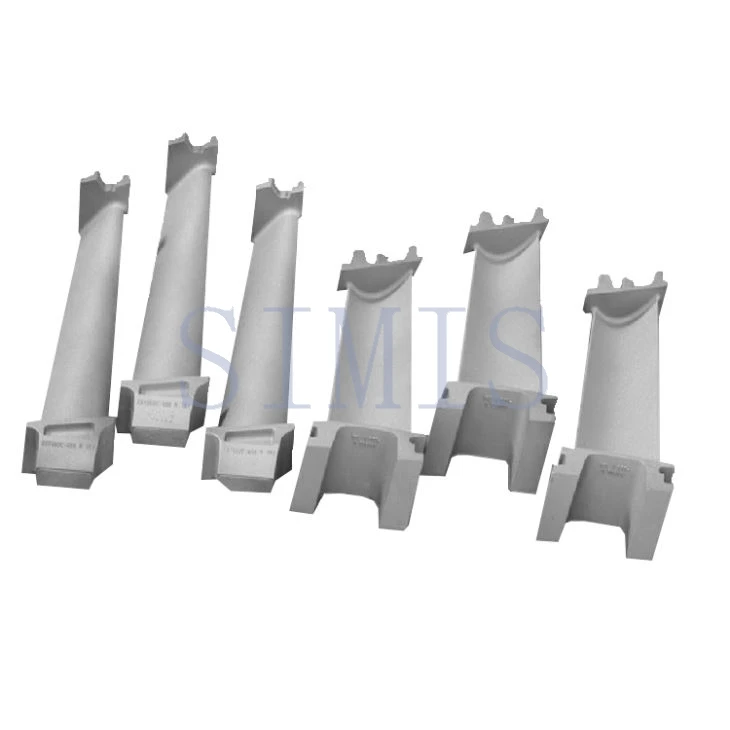
One of the most commonly used materials for turbine blades is superalloys. Superalloys are a class of high-performance alloys that are specifically designed to withstand the harsh operating conditions of turbines. They typically contain a high percentage of nickel, chromium, and other alloying elements, which provide excellent strength, creep resistance, and corrosion resistance. Superalloys can be further classified into different types, such as wrought superalloys and cast superalloys, depending on their manufacturing process.
In addition to superalloys, other materials such as ceramics and composites are also being explored for use in turbine blades. Ceramics have excellent high-temperature properties and can withstand very high temperatures without deforming or melting. Composites, on the other hand, offer a combination of high strength, low weight, and excellent corrosion resistance. However, the use of these materials in turbine blades is still in the research and development stage, and there are several challenges that need to be overcome before they can be widely adopted.
Manufacturing of Turbine Blades
The manufacturing of turbine blades is a complex and precise process that requires advanced manufacturing techniques and equipment. Turbine blades are typically manufactured using a combination of casting, machining, and finishing processes.
One of the most common manufacturing processes for turbine blades is investment casting. Investment casting, also known as lost-wax casting, is a precision casting process that allows for the production of complex-shaped parts with high accuracy and surface finish. In investment casting, a wax pattern of the turbine blade is first created using a master pattern. The wax pattern is then coated with a ceramic shell, which is baked to remove the wax and harden the shell. Molten metal is then poured into the ceramic shell to create the turbine blade.
After the casting process, the turbine blades are typically machined to achieve the desired dimensions and surface finish. Machining processes such as milling, turning, and grinding are used to remove any excess material and to create the necessary features on the blades, such as cooling holes and dovetail slots. Finally, the turbine blades are finished using processes such as polishing and coating to improve their surface quality and corrosion resistance.
Importance of Quality Control
Given the critical role that turbine blades play in the performance and safety of turbines, quality control is of utmost importance in the manufacturing process. Quality control measures are implemented at every stage of the manufacturing process to ensure that the turbine blades meet the required specifications and standards.
One of the key quality control measures is non-destructive testing (NDT). NDT techniques such as ultrasonic testing, radiographic testing, and magnetic particle testing are used to detect any internal defects or flaws in the turbine blades. These techniques can identify defects such as cracks, porosity, and inclusions, which can have a significant impact on the performance and durability of the blades.
In addition to NDT, other quality control measures such as dimensional inspection, surface finish inspection, and material testing are also carried out to ensure that the turbine blades meet the required specifications. These measures help to ensure that the turbine blades are of high quality and can withstand the harsh operating conditions of turbines.
Conclusion
The interaction between turbine blades and the working fluid is a complex and fascinating phenomenon that is governed by the principles of aerodynamics and thermodynamics. The design, material selection, and manufacturing of turbine blades are all critical factors that influence this interaction and the overall performance of the turbine. As a leading Turbine Blades supplier, we are committed to providing our customers with high-quality turbine blades that are designed and manufactured to the highest standards.
If you are in the market for turbine blades or Nozzle Guide Vane, we invite you to contact us to discuss your specific requirements. Our team of experts will be happy to assist you in selecting the right turbine blades for your application and to provide you with a competitive quote.
References
- Cohen, H., Rogers, G. F. C., & Saravanamuttoo, H. I. H. (2008). Gas Turbine Theory. Pearson Education.
- Moran, M. J., & Shapiro, H. N. (2010). Fundamentals of Engineering Thermodynamics. John Wiley & Sons.
- Anderson, J. D. (2007). Fundamentals of Aerodynamics. McGraw-Hill Education.
- Boyer, H. E., & Gall, T. L. (1985). Superalloys: A Technical Guide. ASM International.