

Geothermal energy has emerged as a reliable and sustainable source of power in recent years, offering a clean alternative to traditional fossil fuels. At the heart of a geothermal power plant lies the turbine, a crucial component that converts thermal energy from the Earth into mechanical energy and then into electricity. Turbine blades play a central role in this energy conversion process. As a leading Turbine Blades supplier, I am excited to delve into the intricate workings of these essential components in a geothermal power plant.
The Basics of Geothermal Power Generation
Before we explore the operation of turbine blades, it's important to understand the basic principles of geothermal power generation. Geothermal power plants harness the heat energy stored beneath the Earth's surface. This heat is transferred to a working fluid, typically water or a binary fluid, which is then vaporized. The high - pressure steam or vapor is directed towards the turbine, where it expands and releases its energy.
The expansion of the steam or vapor in the turbine is what drives the rotation of the turbine shaft. This mechanical rotation is then used to turn an electrical generator, producing electricity. The efficiency of this process depends largely on the design and operation of the turbine blades.
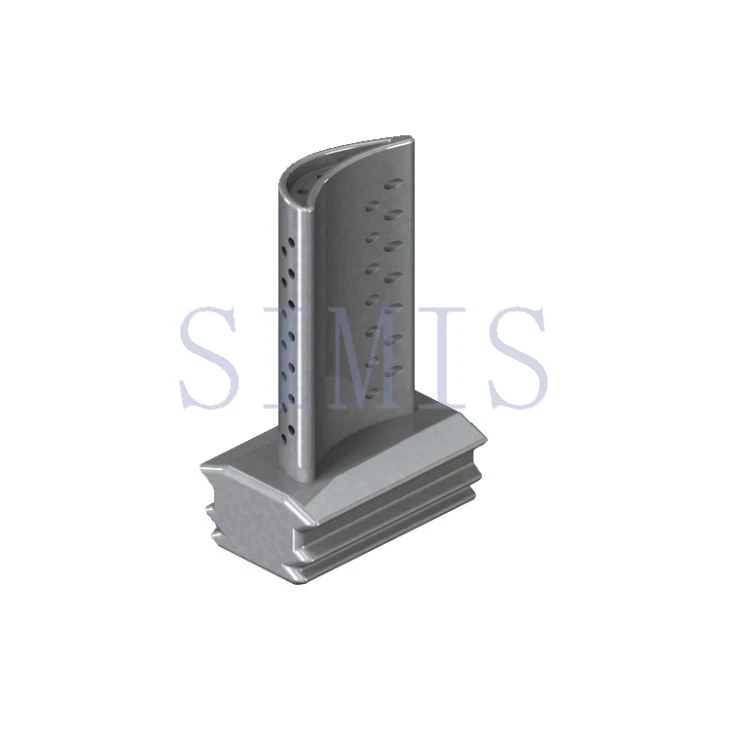
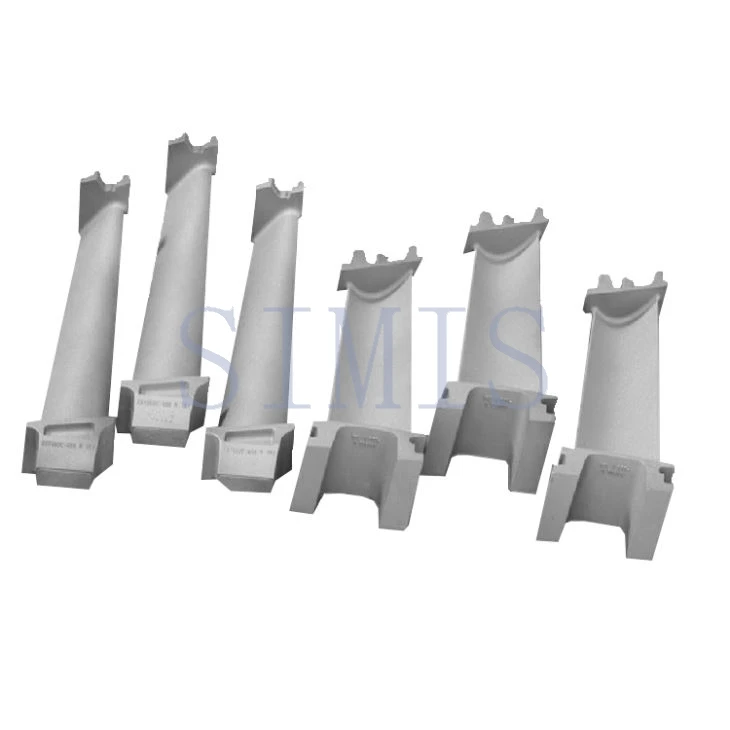
Anatomy of Turbine Blades
Turbine blades are highly engineered components designed to withstand extreme conditions. They are typically made from superalloys, which offer excellent strength, corrosion resistance, and heat resistance. These materials can endure the high temperatures and pressures present in a geothermal power plant.
There are two main types of turbine blades: stationary blades, also known as Nozzle Guide Vane, and rotating blades, simply called Turbine Blades. The Nozzle Guide Vane is responsible for directing the flow of steam or vapor onto the rotating Turbine Blades at the optimal angle. This ensures that the maximum amount of energy from the steam or vapor is transferred to the rotating blades.
The Operation of Turbine Blades
Steam/Vapor Inlet and Nozzle Guide Vane Function
When the high - pressure steam or vapor enters the turbine, it first passes through the Nozzle Guide Vane. The Nozzle Guide Vane is shaped in such a way that it accelerates the steam or vapor and changes its direction. By accelerating the fluid, the kinetic energy of the steam or vapor is increased. The precise shaping of the Nozzle Guide Vane is crucial, as it determines the angle at which the steam or vapor strikes the rotating Turbine Blades.
The angle of incidence of the steam or vapor on the Turbine Blades is carefully calculated to maximize the transfer of energy. If the angle is too large or too small, the efficiency of the turbine will be significantly reduced. Our company, as a Turbine Blades supplier, uses advanced computational fluid dynamics (CFD) simulations to optimize the design of both the Nozzle Guide Vane and the Turbine Blades.
Energy Transfer on Rotating Turbine Blades
Once the steam or vapor strikes the rotating Turbine Blades, it exerts a force on them. This force causes the Turbine Blades to rotate around the turbine shaft. The shape of the Turbine Blades is designed to efficiently extract energy from the steam or vapor. The blades are curved in a way that allows the steam or vapor to flow smoothly over them, gradually losing its energy as it expands.
As the steam or vapor expands over the Turbine Blades, its pressure and temperature decrease, while its velocity increases. This change in the properties of the steam or vapor is used to generate torque on the turbine shaft. The torque causes the shaft to rotate, which in turn drives the electrical generator.
Multiple Stages of Turbine Blades
In most geothermal power plants, turbines are designed with multiple stages of turbine blades. Each stage consists of a set of Nozzle Guide Vane followed by a set of rotating Turbine Blades. The purpose of having multiple stages is to extract as much energy as possible from the steam or vapor.
As the steam or vapor passes through each stage, it continues to expand and lose energy. The design of each stage is optimized based on the properties of the steam or vapor at that particular point in the turbine. For example, the first stage is designed to handle high - pressure steam or vapor, while the later stages are designed for lower - pressure, higher - volume flow.
Challenges in Turbine Blade Operation
Operating turbine blades in a geothermal power plant is not without its challenges. One of the main challenges is the presence of corrosive substances in the geothermal fluid. The geothermal fluid can contain various chemicals such as sulfur, chlorine, and other minerals, which can cause corrosion and erosion of the turbine blades over time.
To address this issue, we, as a Turbine Blades supplier, use advanced coating technologies. These coatings provide an additional layer of protection against corrosion and erosion. The coatings are carefully selected based on the specific composition of the geothermal fluid in each power plant.
Another challenge is the high - temperature environment. The high temperatures can cause the turbine blades to deform or lose their strength. To mitigate this, we use superalloys with high - temperature resistance and incorporate cooling channels within the turbine blades. These cooling channels allow a coolant, usually air or steam, to flow through the blades, reducing their temperature and maintaining their structural integrity.
Maintenance and Inspection of Turbine Blades
Regular maintenance and inspection of turbine blades are essential to ensure the reliable operation of a geothermal power plant. We recommend a comprehensive maintenance schedule that includes visual inspections, non - destructive testing (NDT), and performance monitoring.
Visual inspections can reveal obvious signs of damage such as cracks, erosion, or corrosion on the surface of the turbine blades. NDT techniques, such as ultrasonic testing, eddy - current testing, and X - ray testing, can detect internal defects that may not be visible to the naked eye.
Performance monitoring involves measuring the efficiency of the turbine over time. A decrease in efficiency can be an indication of problems with the turbine blades, such as fouling or damage. By regularly monitoring the performance of the turbine, potential issues can be identified and addressed before they lead to a major breakdown.
The Role of a Turbine Blades Supplier
As a Turbine Blades supplier, our role is not only to provide high - quality turbine blades but also to offer comprehensive support to our customers. We work closely with geothermal power plant operators to understand their specific requirements and challenges.
We use state - of - the - art manufacturing processes, such as lost - wax investment casting, to produce turbine blades with high precision and quality. Our R & D team is constantly working on improving the design and performance of our turbine blades, taking into account the latest advancements in materials science and engineering.
We also offer after - sales services, including maintenance support, repair, and replacement of turbine blades. Our goal is to ensure that our customers can operate their geothermal power plants efficiently and reliably.
Conclusion
Turbine blades are the heart of a geothermal power plant, playing a crucial role in converting thermal energy into electrical energy. The operation of turbine blades involves a complex interplay between fluid dynamics, materials science, and mechanical engineering. As a Turbine Blades supplier, we are committed to providing the best - in - class turbine blades and support services to our customers.
If you are involved in the geothermal power industry and are looking for high - quality turbine blades, we invite you to contact us for a procurement discussion. Our team of experts is ready to assist you in finding the most suitable turbine blades for your power plant.
References
- Boyce, M. P. (2012). Gas Turbine Engineering Handbook. Elsevier.
- Moran, M. J., & Shapiro, H. N. (2010). Fundamentals of Engineering Thermodynamics. Wiley.
- Incropera, F. P., & DeWitt, D. P. (2001). Introduction to Heat Transfer. Wiley.