

Hey there! I'm a supplier of Sewing Machine Casting, and today I want to dig into a question that often pops up: Can sewing machine casting be welded?
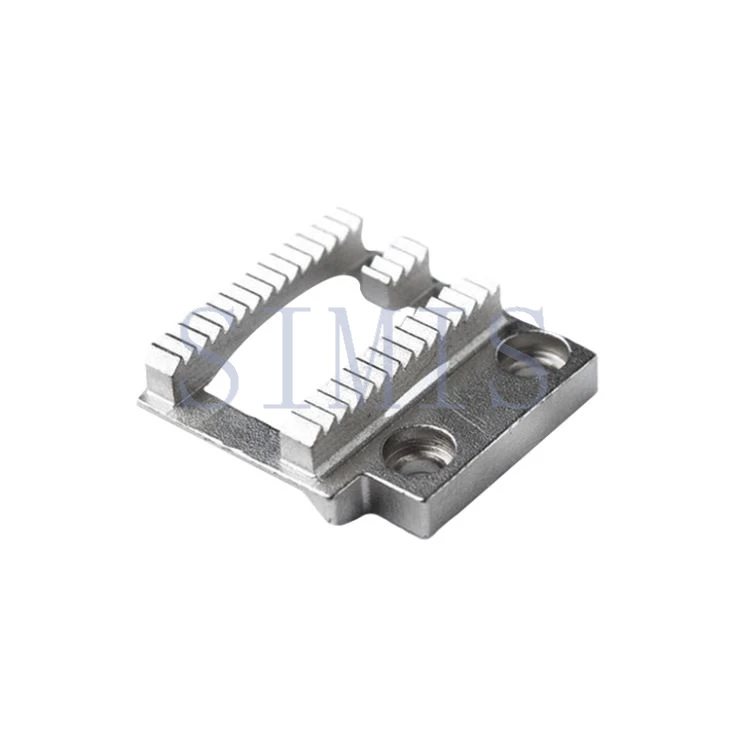
First off, let's talk a bit about what sewing machine casting is. Sewing machine casting involves creating parts of a sewing machine through the casting process. Casting is a manufacturing method where liquid metal is poured into a mold to take on the desired shape as it solidifies. Sewing Machine Casting parts are crucial for the proper functioning of sewing machines, as they need to be strong, durable, and have precise dimensions. You can learn more about Sewing Machine Casting on our website.
Now, onto the big question: welding sewing machine castings. The answer isn't a simple yes or no. It depends on several factors.
Factors Affecting Weldability of Sewing Machine Castings
Material of the Casting
Sewing machine castings can be made from different materials, and each material has its own welding characteristics. Common materials for sewing machine castings include cast iron and steel.
Cast Iron: Cast iron is a popular choice for sewing machine parts because of its good damping properties, which help reduce vibrations during operation. However, cast iron is notoriously difficult to weld. It has a high carbon content, which can lead to the formation of hard and brittle zones in the weld area. When the molten cast iron cools, the carbon can form hard carbides, making the weld prone to cracking. Special welding techniques and pre - and post - welding heat treatments are often required to successfully weld cast iron. For example, preheating the casting to a specific temperature before welding can help reduce the cooling rate of the weld, minimizing the formation of hard zones.
Steel: Steel castings are generally more weldable than cast iron. Different types of steel, such as carbon steel and alloy steel, have different welding requirements. Carbon steel with a relatively low carbon content is easier to weld compared to high - carbon steel. Alloy steel, which contains additional elements like chromium, nickel, or molybdenum, may require specific welding electrodes and procedures to ensure a strong and defect - free weld.
Design and Shape of the Casting
The design and shape of the sewing machine casting can also impact its weldability. Complex shapes with thin walls or sharp corners can make it difficult to achieve a proper weld. Welding thin - walled castings requires careful control of the welding parameters to avoid burning through the material. Sharp corners can act as stress concentrators, increasing the likelihood of cracking in the weld area.
Quality of the Casting
The quality of the casting itself plays a role in weldability. Castings with internal defects such as porosity, inclusions, or cracks may not weld well. Porosity can cause gas pockets in the weld, weakening its strength. Inclusions can interfere with the fusion of the weld metal and the base metal, leading to poor weld quality.

Welding Methods for Sewing Machine Castings
If the conditions are right and the casting is suitable for welding, there are several welding methods that can be used.
Arc Welding
Arc welding is a commonly used method for welding metal castings. Shielded Metal Arc Welding (SMAW), also known as stick welding, is a versatile process that can be used for both cast iron and steel. It uses a consumable electrode coated with a flux that protects the weld from atmospheric contamination. Gas Tungsten Arc Welding (GTAW), or TIG welding, is another option. It uses a non - consumable tungsten electrode and an inert gas (usually argon) to protect the weld. TIG welding is known for its precise control and ability to produce high - quality welds, especially on thin - walled or high - quality castings.
Gas Welding
Gas welding was once a popular method for welding cast iron. It uses a flame produced by the combustion of a fuel gas (such as acetylene) and oxygen to heat the base metal and the filler material. Gas welding allows for relatively slow heating and cooling, which can be beneficial for cast iron to reduce the risk of cracking. However, it is less commonly used today due to the availability of more efficient and precise welding methods.
Applications of Welded Sewing Machine Castings
Welding can be useful in several scenarios for sewing machine castings.
Repair of Damaged Castings
If a sewing machine casting is damaged, such as having a crack or a broken part, welding can be used to repair it. This can be a cost - effective alternative to replacing the entire casting. For example, if a small crack develops in a cast iron sewing machine frame, welding the crack can restore the functionality of the part.
Modification or Customization
Sometimes, customers may request modifications or customizations to the sewing machine castings. Welding can be used to add or attach additional components to the casting. For instance, if a customer wants to add a mounting bracket to a steel sewing machine base, welding can be used to securely attach the bracket.
Similarities and Differences with Other Castings
It's interesting to compare the weldability of sewing machine castings with other types of castings, such as Car Exhaust Flange and Fans Blades Casting.
Car Exhaust Flange
Car exhaust flanges are often made of steel or stainless steel. Similar to sewing machine steel castings, they are generally weldable. However, car exhaust flanges are exposed to high temperatures and corrosive exhaust gases during operation. This means that the welds need to be able to withstand these harsh conditions. Special welding techniques and corrosion - resistant filler materials may be required to ensure the long - term performance of the weld.
Fans Blades Casting
Fans blades castings can be made from various materials, including aluminum alloys and steel. Aluminum alloy castings are more difficult to weld compared to steel castings due to their high thermal conductivity and the formation of a tenacious oxide layer on the surface. Similar to sewing machine castings, the design and shape of fan blades can also pose challenges for welding. Thin and aerodynamically shaped fan blades require precise welding to maintain their performance.
Conclusion
So, can sewing machine casting be welded? The answer is yes, but with certain conditions. The material, design, and quality of the casting all play important roles in determining its weldability. By understanding these factors and using the appropriate welding methods and techniques, it is possible to weld sewing machine castings for repair, modification, or customization purposes.
If you're in the market for high - quality Sewing Machine Castings or have questions about their weldability, feel free to reach out. We're here to provide you with the best products and solutions for your sewing machine needs. Whether you're a small - scale sewing machine manufacturer or a large - scale industrial user, we can work with you to meet your specific requirements.
References
- "Welding Metallurgy" by John C. Lippold and David L. Kotecki
- "The Welding Handbook" published by the American Welding Society